Debate moderators fail to press Harris on spice and seasoning choices

ABC News debate moderators David Muir and Linsey Davis are taking heat today over their failure to press Kamala Harris on her changing positions regarding spices and seasonings.  As a presidential candidate in 2020, Harris was clear in her opposition to Creamy Peppercorn Dressing Base, but has just recently come out in support of it. 

“My position on Creamy Peppercorn has never wavered.  It’s delightfully creamy.  It’s sinfully peppercorn.  America has always stood for Creamy Peppercorn and my administration will back it 100 percent,” Harris told the moderators.

About midway through Tuesday night’s debate, veteran ABC News anchor, David Muir, delivered another one of his probing questions tailored to get at the heart of the Harris campaign’s vision for the United States. 

“The United States is a melting pot of a wide assortment of aromas, textures and flavors simmering on a stove.  You remove the lid and have a taste.  What seasoning is missing?” Muir asked. 

“Well, Dave, you know I’m pretty fond of Fox Point Seasoning, so I could add a dash of that.” Harris responded.  “Of course you can never have too much Tuscan Sunset Salt Free Italian Seasoning.  But if I had to add one spice to pull it all together, I’d add a pinch of Kamala’s Joy.”

“Wrong.  Wrong.  Salt and pepper.  Maybe a little Ragin’ Cajun,” Trump bellowed before moderators cut him off.

Before Oom became omnipotent: The clairvoyant vagrant

While Oom the Omnipotent, Pierre Bernard, is nowadays credited with introducing yoga practices to America’s elites, his numerous other accomplishments included founding a tantra commune, managing a baseball team, and serving as a bank president.  He was a yogi, a hypnotist, an occultist, a scholar, and a lecturer.  He also dabbled in dog racing.  Indeed, there was a time when Oom the Omnipotent exerted a mesmerizing influence over some of the flakiest of America’s upper crust.  However, it wasn’t always so.  Becoming omnipotent requires a great deal of trial and error, mostly error in Bernard’s case.  Not to mention that in one’s quest for omnipotence, one is bound to run afoul of local law enforcement authorities who are often reluctant to accommodate a man on his quest for omnipotence.  For certain, in Bernard’s case chasing omnipotence was mostly accompanied by scandal, run-ins with the law, charges of fraud and unshakeable impotence. 

Oom was born Perry Arnold Baker to Erastus W. Baker and Kittie C. (Givens) Baker in Leon, Iowa in 1875.  The couple soon divorced, however, and Kittie remarried to John C. Bernard, with young Perry taking on the surname of his stepfather.  After Perry was sent to Lincoln, Nebraska to live with a cousin, he met Sylvais Hamati and became Hamati’s pupil.  The pair eventually landed in San Francisco in 1893.  Billed as Hamati’s pupil, Bernard taught hypnotism and promoted its use to treat psychological maladies.

In May of 1897, Perry A. Baker partnered with Dr. H. M. Thornton in a venture called the Pacific Hypnotic Institute at 44 Sixth street in San Francisco.  Scandal erupted when the parents of young Edward Kline complained to police that their son “has stayed away from home and been entirely under the influence of the disciples of Mesmer.”  Despite the parents’ repeated efforts to see their son, Baker and Thornton denied knowledge of Kline’s whereabouts.  However, during an interview with an officer McMurray, Perry Baker’s powers of omnipotence began to kick in and he spilled the beans on the recent activities of the young Kline.  

“He said the boy is an excellent subject and when under hypnotic influence is a great clairvoyant.  He sees wonderful things.  The lad is particularly valuable as a subject for students of hypnotism, Baker’s pupils, to practice their newly developing powers upon.  He yields readily to their influence.  In fact, of all his subjects, Baker said, Kline was the favorite.  Baker said that he pays Kline $5 a week, and gives him his board and lodging for his services, and added that the boy is worth three times as much,” the San Francisco Call and Post reported.

During a court hearing convened to determine if Edward Kline was a vagrant, Perry Baker testified that his powers of hypnotism saved the boy’s life.  According to Baker, the boy’s parents objected to his desire to marry a young girl for whom he had tender feelings.  This caused Kline to become suicidal.  “Perry explained that young Kline was saved from death by carbolic acid poisoning by hypnotic powers that were thrown upon him,” said the Call and Post.  Of course, this was all news to his mother who knew nothing of her son’s designs to marry.

But the tale became a great deal stranger when Edward Kline himself made revelations to the court so astonishing that they caused Judge Campbell to comb his whiskers vigorously with his fingers in anxious disbelief.

According to Kline, there was a club of lawyers and businessmen who met weekly on the fifth floor of the Parrot building on Monday evenings.  “The lawyers, so the lad stated, would throw him into a trance to make use of his clairvoyant powers.  They would send his mind to read the minds of their clients in order to secure more facts as to cases in hand.  They would also get him to go out on similar occult expeditions to probe the minds of opposing counsel in order to get ‘tips’ as to what their next moves would be.

“Others, the boy stated, were in search of information as to mining stocks and the probability of certain horses winning at the races.  

“From what he could learn from these seekers for inside facts the lad said he believed he gave them pretty straight ‘pointers.’”

The boy went on to testify that “he feels sure that those for whom he has been a subject will come to his rescue and try to prove that he is not a vagrant and that his mental submission to their wills is not in any way an injury to him,” the Call and Post read.

Ultimately, Judge Campbell decided there was no evidence to support the charge of vagrancy and terminated the inquiry.  He then made a rather unorthodox ruling, ordering the boy be hypnotized to “make him think he has a desire to stay with his mother, and then to send him home.”

Apparently, Judge Campbell’s solution worked because the boy returned home “and declared his intention to remain at home with his mother.”  Additionally, in a follow-up call to the Call editorial room, Baker and Thornton took full credit for young Kline’s change of heart.  “‘You remember,’ said Thornton, ‘that Kline said in court he would rather go to the reform school than go home.  Now he says that he is glad to be home, and that he intends to stay there.  That is because of the hypnotic suggestion I gave him.  The suggestion will influence him as long as I choose.’”

Free from the sinister influence of the Pacific Hypnotic Institute, Edward Kline’s mind slowly began to emerge from captivity.  As the San Francisco Examiner reported a few days later, “Young Kline refers now to the hypnotists as fakirs and declares that they used belladonna and chloroform on subjects and students.  He has not yet recovered from the effects of his stay in the studio.  His nerves are much unstrung.  His mother says that his actions at times are very peculiar.  Young Kline has many marks on his body to show where he was struck, and where pins were stuck into his flesh while he was in either a condition of hypnotism or under the influence of chloroform.”

While it is not known how the lawyers and businessmen of the Parrot building fared after their clairvoyant was returned to his family, there can be no doubt that Perry A. Baker aka Perry Bernard aka Pierre Bernard learned a valuable lesson.  Whatever hypnotic powers or occult wisdom Bernard may or may not have possessed, he certainly grew in his knowledge and ability to exert influence over others and brainwash the unsuspecting, a skill that would serve him well and he would repeatedly employ in his quest to become Oom the Omnipotent.

Sources:

Census records

The Leon Journal-Reporter

The San Francisco Call and Post

The San Francisco Chronicle

The San Francisco Examiner

The Great Oom: The Improbable Birth of Yoga in America by Robert Love (2010)

Wales dances all night at Cosden estate

One hundred years ago this morning, September 4, 1924, Edward the Prince of Wales wearily returned to the James Burden estate after a night of gayety that included a stag dinner party followed by dancing until dawn at the home of Joshua S. Cosden. 

As the Brooklyn Daily Eagle reported that day, “It was another dancing party which kept Wales out all night, this time at the home of Mr. and Mrs. J. S. Cosden at Sands Point.  The party was a small but jolly one.  Other guests included Lord and Lady Mountbatten, Lord and Lady Milhaven and the Hon. Mrs. Richard Norton.”

Reporter Frank Getty was keeping close tabs on the prince that morning, writing in the Brooklyn Daily Times, “‘Please use the rear entrance,’ was the unwritten order at the James A. Burden estate today.  In one of the bedrooms in the front of the big red brick house a young man was sleeping.  He needed to.  He had been out all night for the third time in three days.  Edward, Prince of Wales, kept his fair curls tight on the pillow all morning.  Downstairs, menials and secretaries tip-toed about.  At the gates to ‘Woodsides,’ the gray-clad troopers shooed visitors around to the back door.

“Last night, after a dinner at the Piping Rock Club, the Prince, together with Lord and Lady Mountbatten and the Marquis and Marchioness of Milford Haven, went off to a dance at the Long Island home of Joshua S. Cosden.  It lasted until 5 A.M.”

The New York Daily News reported, “Before going to the Cosden manor the prince attended a stag at the Piping Rock club….  After the stag the prince went to the home of Mr. and Mrs. Joshua S. Cosden, where he danced until morning.”

Grace Robinson wrote about the morning of September 4, “Before inspecting his third Long Island sunrise from the Cosden manor, the prince had been with the Piping Rock club at a gay stag….  After the stag, the prince went to the Cosdens where he danced until morning.”

Robinson also detailed how reporters assigned to follow the prince struggled to adjust to his brutal schedule.  “The prince, having slept all of five hours, was at the private polo field of John S. Phipps promptly at noon.  Reporters who went there were amazed to find him in tan jersey and Indian polo helmet cavorting about on his favorite mare, Kitty.  He seemed fresh and eager for the sport, while the journalists were still nursing headaches following all night duty on the Piping Rock dinner and the Cosden dance.”

Following the “small but jolly’ Cosden party, there is clear consensus among reporters regarding the prince’s activities and whereabouts the previous evening and through the night until dawn.  There is no confusion, no conflicting reports coming from the gaggle of reporters assigned to follow Wales.  Nowhere in any of the contemporary accounts of the prince’s actions that night is there even a hint that Wales made a new friend at the Cosden party, and the pair motored to Broadway to go on a speak crawl.  

Yet, fast forward a hundred years and that is exactly what a former journalist and current writing professor would have us believe.  And if Dean Jobb, author of A Gentleman and a Thief, had presented his book as a work of historical fiction, he could be congratulated for authoring a damn fine story.  But he claims it’s a work of creative non-fiction.  In a note to readers, he writes,  “No quotations have been altered; no details have been added or embellished.  All scenes and events unfolded as described.  Where there were differing accounts of conversations or what happened, I relied on what was said at the time, rather than what Barry and others remembered or asserted long afterward.”

In the words of Colonel Sherman T. Potter, “Horse Hockey!”  Jobb clearly read at least some of the accounts I just presented, because he refers to the Cosden party as a “‘small but jolly’ gathering.”  Yet he ignores “what was said at the time” in favor of the much later recollections of a thief and a con man.  The book is full of these poor choices.  As a work of historical fiction, it’s a great story.  As a work of history, it’s severely lacking.

Americans clamor for Chick-fil-A style innovation and leadership

As Americans once again face the choice between two highly undesirable presidential candidates, many are looking for leadership elsewhere and some think they’ve found it.

Just outside of metro Atlanta in McDonough, Georgia, a modern marvel of engineering and efficiency recently opened its doors, or rather its drive-thru.

Chick-fil-A opened a first-of-its-kind restaurant with four drive-thru lanes that flow beneath an elevated kitchen.  The technological wonder features a “unique meal transport system” delivering customer orders via a “sophisticated conveyor belt” that allows a meal to be delivered to hungry customers every six seconds.

“It’s just like the Jetsons, dude,” said one satisfied customer.

“When I was a kid, this is what I imagined the future would look like,” said another diner as he looked on in awe at the four lanes of traffic that steadily flowed through the technological wonder.

“Americans deserve more of this,” says political analyst, Clifton Friedman.  “Whoever designed and engineered this astonishing and uniquely American miracle of technology and capitalism should be running this country.”

You won’t get any argument out of these Chick-fil-A patrons. “I’d vote for that bastard in a heartbeat,” said a man sitting in his pickup, munching on a spicy chicken deluxe and waffle fries.

“In a country where so many institutions seem to be on shaky ground and incompetence often appears to get rewarded, it’s nice to see the old American can-do spirit is still alive and well in some places. A chicken in every sack,” Friedman added.

Local dad has everything under control

Herb Gluck was enjoying reading a book on a quiet Sunday afternoon when he suddenly recalled that a number of things on his weekend to-do list had yet to be addressed.  Realizing his daughter needed to pack a lunch for school the next day, he wondered if the family pantry contained all the necessary food items.  Picking up his phone, Herb immediately called his wife and learned she and his daughter were already at the supermarket making all the necessary purchases.  Emergency avoided, Herb returned to his book, content that he’d successfully managed that near miss.  Herb had only completed a few more paragraphs of his engrossing spy novel when he remembered that tomorrow was trash day and he had not yet rolled the garbage bin out to the curb.  He texted his son to get a status update.  Herb’s son texted back that he took out the garbage when he left the house to meet his girlfriend for a study date.  Satisfied and mildly surprised to learn that his son had a girlfriend, Herb enjoyed a sip of his Arnold Palmer and again returned to his spy thriller, pleased that he’d put out yet another fire.  Moments later, however, he had a start when it struck him that he was supposed to pick up a pizza for dinner that evening.  But before he could grab his phone, it buzzed with a notification that a pizza had been delivered and was currently sitting on his front porch.  He wasn’t sure who placed the order, but he nonetheless left the delivery person a generous tip.  Once again, Herb returned to his book, at last relaxed and satisfied that he finally had everything under control, yet still mildly perturbed that he had to do everything himself.

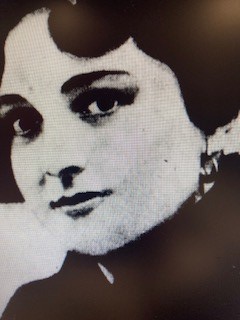
Queen of the Con: Buda Godman’s early life and first brush with the law

In 1916, Buda Godman gained national attention for her role as the lost damsel in a badger game con that garnered much fanfare after touring New York, Atlantic City and Chicago, when authorities there finally brought its run to a close.  News of a former convent school girl running with a gang of international blackmailers shocked the nation, and many believed Buda was as much a victim of the con as its mark, wealthy widower Edward R. West.  But Buda Godman was nobody’s victim, and West was not the first knight in shining armor she had taken for a ride.

Although Helen “Buda” Godman was born and raised in Chicago, her parents, Otha and Julia, both hailed from Indiana and were married in Lafayette.  Due to family ties, the Godman’s spent a great deal of time visiting relatives in Lafayette, and some newspapers report Buda’s family even resided there for a time.  It was in Lafayette that little Helen Godman had an older cousin or aunt also named Helen Godman, which may partly explain how little Helen came to be referred to as Buda.  

As a pint-sized entertainer, little Buda Godman dazzled the townsfolk of Lafayette, Indiana, dancing her way into their hearts long before embarking on her life of crime.  In September of 1898, Miss Buda Godman performed three numbers at a benefit for St. Ann’s church, 612 Wabash Avenue.  

According to the Lafayette Sunday Times, “The feature of the evening’s entertainment was a cake walk, skirt dance and contortion work by Miss Buda Godman ….  This little miss is the personification of grace, and her three numbers were greatly enjoyed and enthusiastically applauded by the large gathering present.”   

The Journal and Courier declared, “This small graceful child completely captivated the audience with her dances….  She is about 9 years old and is one of the most accomplished little dancers in the country.”

In May of 1899, little Helen Godman again delighted the people of Lafayette, singing and dancing to great acclaim at Grand Army hall.  As the Lafayette Journal gushed, “While several of the numbers were encored, the singing of Master Harry Hannagan and the singing and dancing of Little Miss Helen Godman…received the greatest favor.  Miss Helen was recalled several times and her part in the entertainment was one of the most enjoyable features of the evening.”

But it wasn’t just the local townsfolk who found Buda’s performances captivating.  Even a big city impresario became enchanted by her act.  “Little Buda, a short time ago, attracted the managerial eye of Col. John D. Hopkins of a large circuit of theatres, having houses in Chicago, Cincinnati, St. Louis and other cities.  The colonel offered Mr. and Mrs. Godman a very tempting sum for their daughter’s services, but the parents were opposed to her just now becoming associated with the stage,” the Lafayette Sunday Times wrote.

It seems, even at an early age, Buda Godman had already developed the power to send rich men reaching for their wallets.

It wasn’t just the townsfolk of Lafayette that delighted in little Buda’s talent and charm.  Up the road in her hometown of Chicago, she became something of a backstage celebrity among the many who turned out to catch a glimpse of the beautiful and engaging song and dance sensation.  

In Chicago Confidential, Jack Lait and Lee Mortimer report, “One of the principle theatrical hangouts was the basement table-d’hote under the Brevoort Hotel, adjoining the LaSalle Theater, and it was there the town came to peek at and gasp over Buda Godman, who was called the prettiest girl ever born and raised in the town….  Her beauty was so fearsomely fascinating that before maturity she stopped traffic on the streets.  She was petite, a wee trifle plumpish, with big steel-blue eyes, a tip-tilted nose, an oval face with a dimpled chin, a peewee mouth, and tiny hands and feet.”

Clearly, Buda possessed the power to charm the socks off of just about anyone who beheld her beauty or discerned her many talents.  But, as a race track sheet-writer, Buda’s “father’s calling threw him in with shady people.”  So, while her parents may have wished to shield her from a life of the stage and protect her from the many unpredictable and unsavory characters who inhabited her father’s profession, they likely never considered the threat that loomed almost literally inside the home. 

On July 13, 1903, a young couple was arrested by Milwaukee police at the Cream City Opera Garden, which some news reports described as a beer garden.  A 14-year-old Helen Godman of 1169 Lexington Street, Chicago was found in the company of her 20-year-old cousin Norvin Godman of 1133 Lexington Street, Chicago.  Norvin was a barber by trade and lived with his parents just down the street from his little cousin Buda.  

Accounts of how they came to be at that location together were somewhat unclear.  One said Buda had asked her cousin to take her to Milwaukee, to which he obliged.  Other versions said the pair had eloped.  What is clear is that Buda’s parents did not approve of her associating with the young barber and forbid her to see him.

The proprietor of the Cream City Opera Garden, Frank Nolan, was a friend of Norvin Godman.  It was reported the pair had planned to reside with the man.  Buda’s parents were aware of Norvin’s association with Frank Nolan and likely directed authorities to that location.  While Buda’s parents would later deny the couple planned to elope, and the whole affair was simply a misunderstanding, Buda and Norvin’s comments in the press seemed to contradict that assessment.  

According to the Chicago Examiner, Norvin Godman told detectives, “‘I love Helen,’ he said, ‘and I want to marry her.  I don’t see that this is any of your business.’”  Despite the young man’s protestations, the police made it their business, and Norvin Godman was treated to a few nights in jail. 

Buda told reporters, “Of course, I’m too young to marry, but I guess I would have married my cousin, Norvin Godman, if my father hadn’t prevented me.”  

Attempts by Buda’s parents to portray the incident as an innocent miscommunication were likely an effort to avoid additional scandal.  While it is difficult to judge whether the sordid affair contributed to Buda’s eventual pursuit of a life of crime and deception, her parents may have seen the writing on the wall.  A year later when Buda was fifteen, her parents sent her off to St. Joseph’s Academy, a Catholic girls’ school in Adrian, Michigan.

Instant Karmala’s gonna get you

Instant Karmala’s gonna get you.  Going to knock you on the head.  You better get your message together.  And don’t be voting red.

Think of poor old Morning Joe, and the folks over at WaPo.  They’ve all got second homes, you know.  And a portfolio, well there you go.

Instant Karmala’s gonna get you.  Going to gaslight you to sleep.  Better get yourself together, darling, and get behind the veep.

They all said old Joe’s just fine.  Nothing’s the matter with his mind.  Then he spaced out on TV.  For all to see, it’s not cheap fakery!  

Well they all clown on.  Like the news, politicians and corporations.  Well they all clown on.  Come on.

Instant Karmala’s gonna get you.  Going to tell it to your face.  You better get yourself together, sunshine, and join the presidential race.

It’s way bigger than you and me.  It’s even bigger than TV.  It’s just our democracy, they’ll fricassee!  Just wait, you’ll see! 

And they all clown on.  Like the news, politicians and corporations.  Well they all clown on.  On and on and on and on.

Local man cool with kids walking across his lawn

It was one of those delightful summer Saturdays with cloudless blue skies, buckets of sunshine and comfortable warm temperatures.  Due to recent severe weather activity with accompanying high winds, many in the neighborhood were out gathering fallen branches and debris and stacking it out by the curb for the street department to pick up.  Traffic was scarce with the locals opting to walk or ride bikes.  Children played on the sidewalk and groups of aimless teenagers slunked around the neighborhood.  

As I worked in the yard, one such group of foot-draggers emerged from the alley next to my house.  Unused to performing ninety degree right turns, this cohort opted instead for a softer forty-five degree angle across my front lawn.  From my vantage point in the bushes where I was pulling weeds and gathering debris, I could have barked at them to “Get off my lawn!” and scared the living daylights out of them.  However, as tempting as that was, it’s just not my style and it just wasn’t one of those days.  

It was a day for taking it slow, for hearing laughter in the wind, for observing streaks of sunlight flickering through the trees, for unexpectedly intercepting the aroma of a distant backyard grill.  There is truly something surreal about days like these.  Time slows.  Space is deep-focused and static.  Noticeably absent is the relentless barrage of stimuli that mark most afternoons.  Even the temperamental teens had pocketed their phones and were just enjoying each other’s company.  It could have been 25 years ago.  It could have been 50 years ago.  Hell, if there weren’t a bunch of shiny metal boxes sitting in the street, it could have been over a hundred years ago.

However, somewhere beyond the tranquil scene lay an unseen realm.  If at that moment I could observe it, I’d probably notice unremitting algorithms passing over my head, demanding care and attention.  I would hear sniping voices, users getting ‘owned’ and people presuming the worst and often getting it from one another.  An illusory world casting a dark shadow over our psyches, while increasingly vomiting its madness into the real world.

Thankfully, I was far away from that chaotic place, and all I could think about was how remarkable and strange it is to be alive and standing beneath the sun and these trees in this perfect moment of stillness and peace, while a group of foot-dragging teenagers walked across my lawn.

Build Back Biden

Not long into last week’s presidential debate, it became apparent that the Biden operating system was timing out and beginning to power down.  The President’s debate handlers desperately tried to get Lunch Pale Joe back on track, but to no avail.  A frantic call went out to the President’s aides:

“White House, I can’t hold him!  He’s breaking up!  He’s breaking up!”

The mood among Biden’s team went from disbelief and denial to gloom and hopelessness in the span of a commercial break.  Maddow, Reid and Wallace quickly surmised that Trump must have wielded some occult MAGA magic and surreptitiously cast a spell of confusion over the unsuspecting Commander-in-Chief.

After the initial meltdown had subsided, Morning Joe broke in to rally the Biden forces: 

“Joe Biden, President, a man barely awake after 8:00 p.m.  People, we can rebuild him.  We have the technology.  We can make him better than he was.  Better . . . stronger . . . faster.  We can extend his hours past 8:00 p.m.  They will say, ‘Joe never closes.’  They will call him, ‘24-Hour Joe.’  They will know that even if the dining room is closed, the drive-thru is still open.  We can Build…Back…Biden.  He will be the world’s first six trillion dollar president.”

Did Arthur Barry commit the Cosden jewel theft?

In the days following the capture of Arthur Barry, investigators were eager to pin a long list of Long Island jewel thefts on the gentleman burglar and his partner in crime, Boston Billy Williams.  One job authorities were especially eager to hang on the pair was the early morning robbery of the J. S. Cosden estate, where the Cosdens and Lord and Lady Mountbatten lost $125,000 in precious jewels to thieves during the Prince of Wales American visit of 1924.  

As the Brooklyn Daily Eagle reported on June 8, 1927, “Nassau County authorities investigating the $100,000 jewel robbery in the Kings Point home of Jesse L. Livermore ten days ago believed today that they had reached a solution of the sensational $250,000 jewel thefts from the Port Washington estate of Joshua E. Cosden three years ago…”  

Although Barry cooperated extensively with investigators, confessing to the Livermore robbery and a number of other area thefts, he did not confess to the Cosden robbery, much less reveal his alleged friendship with His Royal Highness.  

Reporting Nassau County District Attorney Elvin N. Edwards statements to the press following Barry’s arraignment, the Montreal Gazette wrote, “Mr. Edwards said that Barry had denied complicity in the robbery at the home of Joshua E. Cosden, near Port Washington, L.I.…Barry admitted other robberies so readily, Mr. Edwards said, that he did not see any reason to doubt his denials of these crimes.”

So, in late August 1927, when a burglar silently exited the Southhampton bedroom of Mrs. James Hastings Snowden with $100,000 of her finest jewelry as she soundly slept, the idea that other sneak thieves might be responsible for some of the high profile Long Island gem thefts became not just a real possibility, but a near absolute certainty.  After all, Arthur Barry and William Monahan were by this time securely behind bars, yet the plundering continued.

Having previously debunked Arthur Barry’s jailhouse tale of sneaking into the “small but jolly” Cosden party and sneaking off with the Prince of Wales in the early morning of September 4, 1924, it is now time to consider the likelihood of whether Barry carried out the Cosden theft. 

Everything that is known about Barry’s alleged involvement in the Cosden robbery appears to originate with Grace Robinson’s 1932 interview with the gentleman bandit.  Dean Jobb’s A Gentleman And A Thief relies heavily on this account, as well as on Anna Blake’s telling and that of Barry’s biographer, who, of course, received the story from Arthur Barry.

Barry’s interview with Robinson comes a full eight years after the Cosden robbery, allowing for no small amount of revisionism to creep into the narrative of his career as a gentleman thief.  In the November 3, 1932 edition of the New York Daily News, under the byline Arthur Barry as told to Grace Robinson, Barry first reveals his tale of how he became chums with the Prince of Wales.  “If I were asked to name the very pinnacle of my success as a gentleman burglar, I would mention my friendship with the Prince of Wales.  I met His Royal Highness in a New York night club when he made a sortie to Broadway during his famous Long Island holiday in 1924.”

This story of Barry’s first encounter with Wales is interesting because it contradicts what would become the accepted narrative that Barry first encountered Wales at the Cosden party.  

Barry goes on to say about his alleged friendship with Wales, “I make the admission reluctantly – it sounds like bragging, but I tell it in no boastful spirit.  It merely shows how far a gentleman burglar can get, if he brings look and manners to his profession of collecting jewels.”

Journalist Grace Robinson interrupts Barry’s narrative to provide some background information.  “Note:  Barry’s reluctance is not feigned.  He repeatedly denied knowing the Prince, and it was not until I confronted him with statements from persons who remember the incident well, that he confessed to having Wales for a drinking buddy in two exclusive hot spots in the smart Broadway of 1924”

Arthur Barry then makes another reluctant admission, “In this connection I may as well admit that it was I who pulled off the Joshua S. Cosden robbery.  That statement will interest the police.  For it’s never been hung on me.”

So up until 1932, more than eight years after the Cosden robbery, Barry denied a role in the theft and avoided revealing any connection to his alleged drinking buddy, Wales.  If not for Grace Robinson setting Barry straight on some of these details and coaxing the real story out of him, we may have never known about this historic encounter.

Barry avoids going into detail about the Cosden theft and returns instead to his first meeting with the Prince of Wales.  “On a night which was shortly before or shortly after the Cosden robbery I was drinking champagne in the Deauville Club … .Suddenly without warning, the Prince walked in.”  After Barry and Wales ordered more champagne and “everybody became chummy,” the two parties “pulled tables together, and I was introduced to His Royal Highness as ‘Dr. Gibson.’” 

This admission is astonishing because in the very first paragraph of Dean Jobb’s book, A Gentleman And A Thief, we are told that Arthur Barry introduced himself as Dr. Gibson to Wales and company as they exchanged pleasantries around the Cosden punch bowl.  How is it that Barry is claiming to have first met Wales at the Deauville Club?  

Once again, Grace Robinson has to call a timeout and interrupt Barry’s account to provide some much needed clarification.  “Note:  At this point Barry, who was speaking in the presence of six policemen, refused to tell more.  From friends out of Barry’s past, we have an amazing story which differs from his own account.” 

Apparently someone forgot to tell Barry how he actually became pals with Wales, and now Grace Robinson sets the story straight.  Robinson then delivers an account which, more or less, lines up with that of Jobb’s book, revealing, “The next night, Barry, now familiar with the ‘inside lay’ at the Cosden home, perpetrated his notorious job there.  Two or three nights later occurred the meeting in the Club Deauville, which Barry has related above.”

Only it wasn’t the next night that the Cosden jewel theft went down, it was five nights later.  The night before the Cosden break-in, the royal entourage attended a party at the home of F. Ambrose Clark.  The night before that Wales attended a dinner of 48 guests at the Piping Rock Club, the Brooklyn Daily Eagle reported, and “After the dinner the Prince embarked on the sort of little party that he likes best.  He did not go to a New York dance, nor did he seek out a tremendous monied palace, but instead he went to the simple little farm retreat owned by Henry Alexander at Glen Cove….There were 25 couples of the young people and the Prince and the young men and girls danced and strolled about the comfortable little homey place under the light of a brilliant moon.”

The more Grace Robinson and Arthur Barry try to construct this tale of Barry crashing the Cosden party and befriending the Prince of Wales, the more the pieces bump up against stubborn reality.  Any investigator hearing this account would have to conclude that Barry is lying, and Grace Robinson, in her zeal to land a great story, is leaning into credulity and trying to help Barry along.  Additionally, anyone today, who claims to be interested in the truth and who uncritically accepts the Arthur-Barry-as-told-to-Grace-Robinson narrative, is committing the sin of not letting the truth get in the way of a good story.      

However, just because Barry is fabricating events after the fact doesn’t mean there couldn’t be some truth to his tale.  It is possible that he committed the Cosden robbery, but the real story is a bit more mundane.  It is also possible that Barry encountered the Prince of Wales at the Deauville Club, and even chatted with him, but never became his friend and ‘drinking buddy.’  However, since Barry’s story contains so many falsehoods and contradictions, it becomes difficult to believe any of it.  Instead, it makes more sense to default back to the position of investigators at the time of Barry’s arrest and believe his claim that he was not responsible for the Cosden break-in.  Almost all the information that later emerges either turns out to be unverified or provably false.  Add to that that there were high profile jewel thefts before Barry became active, and the thefts continued after he was locked up, and it’s clear that Barry’s operation was not the only game in town.