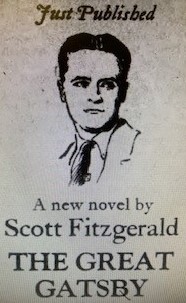
Things “Heard” in The Great Gatsby

In The Great Gatsby, F. Scott Fitzgerald cultivates a tension between an individual’s authenticity, the perception they project and the perception floated by others via rumor and gossip.  No means of deriving the truth about someone is presented as any more reliable, all convey elements of truth and falsehood.  Gatsby projects an image of himself that appears entirely constructed, but as Nick finds out, the construct itself and the motivation behind it reveal a lot about the authentic Jay Gatsby.     

Early in the story, characters discover truth and authenticity by believing what they “heard.”  When Nick goes to visit his cousin Daisy, she tells him, “We heard you were engaged to a girl out West.”  Nick quashes the rumor, but Daisy persists.  “But we heard it….We heard it from three people so it must be true.”  

In his thoughts, Nick sarcastically equates these rumors with an official notice of engagement, but maintains he won’t be “rumored into marriage.”  It’s an acknowledgement of the power of rumor and public perception to make things true that have virtually no basis in reality.  Gatsby himself wields this power to mesmerize and enchant Long Island society folk while trying to capture the object of his desire, Daisy.

Nick gets an earful of things heard from his hosts, Daisy and Tom, who lay bare the dysfunction present in their lives.  First Daisy fills him in on the “family secret” concerning the butler’s nose.  Then Nick is thrown off guard by Jordan’s prying into the secrets of Tom and Daisy’s marriage.  While Tom can be heard inside the house taking a call from his mistress, Jordan eavesdrops, leaning “forward, unashamed, trying to hear….’Don’t talk. I want to hear what happens,’” she says.  The whole scene culminates in an anxious and uncomfortable moment when the truth of what is known, the illusion of what is portrayed, and the confusion of rumor become entangled and loom over the party like a neurotic gloom. 

Regarding his meeting Jordan, Nick remembers he “had heard some story of her too, a critical, unpleasant story, but what it was I had forgotten long ago.”  This unpleasant story will shape the way Nick thinks of Jordan for the rest of their time together, preventing him from committing to her, even as he appears to fall for her.

In the next chapter, Tom invites Nick along to partake in his secret life, treating Nick’s inclusion like it’s the most natural thing in the world, and rendering the whole charade with Daisy and Jordan a mere fact of married life.  Like Gatsby, Tom maintains his own outward illusion, exhibiting a life of wealth, privilege and domesticity while concealing a tawdry affair with the mechanic’s wife and slumming it with her friends in the city.

Then there are the things people have heard about Gatsby, that he is a bootlegger and that he had once killed a man.  It becomes clear to Nick that among the elites of Long Island it is assumed that the image one puts forward is a false representation, and the real truth can be found in the rumors whispered at parties or laid out in scandal rags.  Few people are who they seem and Gatsby represents the biggest mystery of them all.  At some level, it is assumed by the inhabitants of this world that wealth can buy virtue, so the virtue put on display must constitute a fiction.  Gatsby represents a new force emerging in this society that holds a mirror up to the false virtue of the old world money elite and exposes it as a fiction.  His background as an outsider and an interloper reveals that all these old world social customs are just a pretense, a posturing the old money elites engage in to claim moral superiority over those who represent a threat to their status.

Gatsby at 100: “Romantic Readiness”

At the outset of The Great Gatsby, Nick Carraway reveals what he most admired about Jay Gatsby “was an extraordinary gift for hope, a romantic readiness such as I have never found in any other person….”  Of course, at many points during the course of the story, Gatsby’s romantic illusions are met with a mixture of disbelief and mild amusement by Nick.  Gatsby’s “gift for hope” and “romantic readiness” is seen as a character flaw, a naive hindrance to fitting in among the East’s leading elites.  Yet, time and again, Gatsby’s visions manifest themselves in ways that not only serve his purpose, but are met with great enthusiasm by those around him.  The people around Gatsby become willing players in the romantic drama he’s staging.  Nick, despite his momentary reservations, becomes the most willing participant of all, sticking with Gatsby until the end, even when others have fled or forgotten him.  In this way, the people who attend Gatsby’s parties, who inhabit his romantic illusion, are his own creation.  They, too, possess a sort of romantic readiness that finds its reality in the gayety and riotousness of the parties Gatsby throws and the thrilling mystery he represents.  They are drawn like moths to the light of his romantic vision, but soon disperse when that vision is extinguished.                      

According to Nick, Gatsby possesses “some heightened sensitivity to the promises of life….”  Gatsby is the embodiment of this emerging American trait.  The rules and norms of the old social order are on the decline.  It is no longer the case that a person is born into life circumstances and a social rank from which he cannot transcend.  Gatsby can dream a future and he can make it happen.  In order to win back the love of Daisy, Gatsby mimics the elites into whose orbit he has positioned himself.  But Gatsby’s production lacks authenticity.  It is, in many respects, an artificial representation of old money status and materialism.  Those who represent the old order, like Tom Buchanan, do not possess a “romantic readiness,” or a “sensitivity to the promises of life.”  They inhabit the pinnacle of life’s promise and are not dazzled by Gatsby’s flashy stage production.  Tom represents a cold, impenetrable reality in opposition to Gatsby’s grand, romantic aspirations, and he takes extreme diabolical pleasure in exposing the artifice of Jay Gatsby.

Favorite Bot Not Made In America

Many X users are reeling today after discovering their favorite “America First” account was not made in America.  It appears the United States is importing a lot of its patriotic and “pro-MAGA” content from places like Pakistan and Nigeria.

“Just one more thing we don’t make in America anymore,” lamented one social media user.

On the flip side, it was also revealed that some of the left’s favorite grievance catnip is originating from places like India, Bangladesh, Qatar and North Africa.

For once, users on both sides seem to agree that we need to stop off-shoring our culture war content.  Knowing where the information is coming from is a good first step toward assessing its reliability. 

However, it is probably the case that your average online culture warrior doesn’t give a shit where their content originates as long as it’s feeding their priors.  So the extent to which users are being manipulated may not be that great.  Everyone wants to think the other side is being misled, while they’re being given the straight dope.

As for this content, it’s beaming straight out of the American heartland.  This account offers up authentic, corn-fed content too dim-witted and poorly presented to have been written by an artificial impersonator.  

That’s how you know you’re getting the real deal. 

Rash of leaf blower thefts reported

Investigators arrested a man they believe is responsible for a rash of leaf blower thefts in this normally crime-free neighborhood of Paw Paw, Michigan.

Reports of the thefts first emerged a couple weeks ago when homeowners went to undertake the annual ritual of removing fallen leaves from their lawns only to discover that the leaf blowers were missing from their garages. 

After weeks of investigation, detectives zeroed in on a man who had been making a number of disparaging comments about leaf blowers in neighborhood Facebook groups.

Joseph Brickman, age 62 of Paw Paw, wrote in one thread that the sound of leaf blowers “wheezing throughout the neighborhood” was driving him crazy and that he intended “to do something about it.”  However, no one paid any attention to Mr. Brickman because no one ever paid any attention to Mr. Brickman. 

Brickman commented that the near constant noise of 2-stroke engines revving was like “living next to a go-kart track.”  He also compared the sound to a moose call and complained that he worked nights and couldn’t get any sleep during the day as a  “cacophony of lonely moose” made it impossible for him to get any peace.

Investigators became even more suspicious of Brickman when they observed him silently using a rake to gather his leaves into piles.  After questioning Brickman, he allowed them to search his garage where they discovered dozens of leaf blowers stashed under a tarp.  Brickman explained that he’d acquired the devices over the years, but they all “broke down because they’re pieces of junk.”  

Eventually, authorities were able to trace the leaf blowers back to their owners and now the decibel level in the neighborhood has returned to normal. 

Halloween undergoes months of intense whiteboarding

On the eve of Halloween, a group of youngsters in Munster feel they are finally ready for the festivities to get underway after months of intense whiteboarding and strategizing.  

Topics of concern for the myriad whiteboard sessions included costume selection and preparation, neighborhood selection and route scouting, a comprehensive review of previous trick or treat experiences, and development of a candy rating system designed to maximize accumulation of the most desirable treats.

“We really whiteboarded the shit out this Halloween,” said ten-year-old Preston Metcalfe.  “Halloween only comes once a year, so our approach has been that we cannot afford to leave a single stone unturned when it comes to raking in a candy harvest that is second to none.  I mean, I need this Halloween booty to get me through until Christmas.”

Metcalfe explained that in the past too much time has been wasted in neighborhoods where there is low participation and trick or treaters are forced to cover too much distance between participating households.  So Metcalfe and his team identified five “hotzones” in town where they feel the candy is most plentiful and accessible.

Additionally, the team’s rating system has prioritized houses that have traditionally handed out the biggest and tastiest treats while downgrading dwellings that put an emphasis on healthy or eco-friendly snacks.  

“We spent months poring over data to come up with our map.  Additionally, we’ve already walked the route several times, identifying areas of concern and making appropriate adjustments.  If all goes well, this will be the most bountiful Halloween ever,” Metcalfe said.

Washed up NFL QBs deployed to streets of American cities

In an effort to combat the chaos brewing in America’s largest cities, federal officials are considering deploying former NFL quarterbacks and intoxicated sports announcers to the nation’s streets to quell disorder. 

“We just want to get them out there and try to turn down the temperature a little bit,” one official noted.

Over the weekend, former Jets quarterback Mark Sanchez was out patrolling the streets of Indianapolis, Indiana, hunting for ne’er-do-wells, when he encountered an individual he thought was attempting to steal used cooking oil from a downtown hotel. 

Sanchez confronted the man and body slammed the 69-year-old in an alley behind the hotel.  It turns out the man was a legitimate grease truck driver who was authorized to remove the grease from the hotel.

“Mr. Sanchez trusted his instincts on this one and turned out to be wrong, but you got to like his spunk and desire to sniff out the bad guys,” the official said.  

Police noted that prior to his encounter with the grease truck driver, Mr. Sanchez had altercations with two sanitation workers and a document shredder, who all abandoned their suspicious activity when confronted by Sanchez. 

As Sanchez lay in bed this morning feeling like he’d been sacked by a Mack Truck, he remarked to reporters that he wished he was better at avoiding trouble than he was at evading defenses.

Euros Back in a New York Groove

Much of the hype leading up to this year’s Ryder Cup at Bethpage Black Golf Course revolved around the challenge the visiting Euros faced playing in front of a hostile New York crowd.  While the New York fans did their best to get inside the heads of the Euros by heaping abuse on the players and their families, it did not produce the outcome they were looking for.  It did, however, produce a somewhat predictable outcome.  All of the rudeness, taunting, heckling and vulgarity did zero to throw the European players off their game and instead elicited some of the most inspired and exceptional play ever seen at a Ryder Cup event.

As an Indiana Pacers fan, I’ve witnessed this phenomenon many times before.  Whether we’re talking about the Reggie Miller era or the Tyrese Haliburton era, there’s no greater feeling than watching the New York faithful choke on their jeers and insults as their championship hopes go up in flames.  Even though the Pacers have yet to win it all, beating the Knicks and their fanbase year after year is a pretty awesome consolation prize.

The point is, all of the boorish and abusive behavior does nothing to throw a great player off his game.  Great players feed off it and get inspired by it.  They lock into states of concentration and focus seldom achieved under normal circumstances.  Say what you will about Justin Rose, but on Saturday the dude was dialed into Matrix level mental and physical performance, willing the improbable into certainty time and time again.  So, by the way, were his teammates, Tommy Fleetwood, John Rahm, Rory McIlroy and Shane Lowry.

This weekend, the European Ryder Cup team not only won the Ryder Cup but reaped the added bonus of sticking a golf cleat in the mouth of the vaunted New York fanbase.  To his credit, Shane Lowry didn’t give the “choke” sign to the abusive fans after sinking the winning putt, but rather reveled in the victory.  It was nice to see the pure joy of the moment pour out of Lowry and Euros.  They could have taunted the crowd, but instead opted for class and dignity.  Perhaps, in the future, some of the worst clowns in the gallery will do the same.

Parallel Parking Crisis

Among the many things we as a society should be concerned about regarding the younger generation is their inability to parallel park.  Student loan debt, AI, social isolation, mental health and a lack of affordable housing are all things young people are going to struggle with going forward.  But the chief indicator that these kids are not ready for the future is their inability to parallel park.  

As I sat on my front porch the other day, I witnessed the neighbor kid spend 20 minutes trying to parallel park his car.  I’m not sure who was more lame in this situation – the guy who struggled to park his car, or the old timer who had nothing better to do than watch the whole wretched scene unfold.  I fought mightily against the urge to run to his aid and impart my four decades of experience and wisdom.  No doubt, he would have welcomed the neighbor standing on the sidewalk, making hand signals and shouting instructions.  But this felt like a lesson he had to learn on his own.  In the end, he succeeded in getting the little Toyota in the space with only two wheels up on the sidewalk.

Helpful hint:  If you hit the curb with your rear wheel before you get a chance to cut the front end into the space, you’re fucked.  Pull out and start again.  You’re not going to succeed in forwarding and reversing into the space.  Unless your idea of success is parking halfway onto the sidewalk.  You have to start cutting the front end into the space when you still have at least six inches of space between the rear wheel and the curb.  Today’s back up cameras make this maneuver a little easier, but I’m old school, so I just use The Force. 

Sometimes when you’ve cut the front end halfway into the space and you feel like your rear wheel could hit the curb, you can make some midstream adjustments.  But this is some next level parallel parking and should only be attempted once you get the basics down.

I’m aware that a bad parallel parker has options.  Self-parking cars are already a thing, and I’ve even heard there’s an app that, for a small fee, sends out a distress signal to master level parallel parkers who will come park your car for you.  Most of these guys are Uber drivers and off-duty valets.  So, don’t despair, impress that special someone and learn how to parallel park. 

Broadway Butterfly Beatrice Fay Perkins

In the early morning hours of Monday, March 9, 1925, Mrs. Beatrice Fay Perkins returned to her Manhattan apartment at 168 W. 58th St., in the company of her escort, Milton Abbott, a cotton broker and family friend.  The two had been to Reuben’s, 622 Madison Ave., where late night revellers often concluded the night’s gayety with coffee and cold beef sandwiches.  There Mrs. Perkins became ill and asked Abbott to escort her home.  The pair arrived at the apartment around 3 a.m.  

A short time later, a group of masked bandits, using a crowbar and other tools,  “chopped and hacked their way into the luxurious studio apartment.”  Taking the pair by surprise, the gang of thugs first bound and gagged Mr. Abbott before setting upon Mrs. Perkins.  As Mrs. Perkins screamed, one of the robbers punched her in the mouth and grabbed her by the throat.  Another bandit grabbed her arm and twisted it as he tore a diamond bracelet and a diamond-studded watch from her wrist.  He grabbed one of her rings and tore the flesh as he ripped it from her finger.  Then her necklace was taken, and when one of her rings proved too stubborn to remove by conventional means, one of the bandits nearly bit her finger off trying to remove the ring with his teeth.  Not satisfied with the jewels they’d ripped from her body, they cursed and punched Mrs. Perkins as they demanded more loot.

“Where’s the rest of your jewelry, quick, or we’ll kill you,” one of the bandits threatened.

“For God’s sake, don’t do any more,” Mrs. Perkins moaned.  “It’s on the dressing table.  There, in that casket.”

As she lay in a broken heap on the floor, one of the men gave her a final kick while another grabbed the jewels from the dressing table.  Before they fled, the trio of bandits brutally beat Mrs. Perkins unconscious and choked her with a pillow to prevent her from crying out while they fled the scene.  Then, without so much as disturbing a hair on Mr. Abbott’s head, they warned him not to move for ten minutes after they left, or they would kill him.

Once the attackers had left the apartment, it only took Abbott a few moments to slip his bonds.  Once free, Abbott showed little compassion and rendered little aid as he merely clipped Mrs. Perkins’ wrist restraints with a pair of scissors.  Then Abbott did a very curious thing.  As Mrs. Perkins lay semi-conscious on the floor, bleeding from the severe beating she had just endured, Abbott did not call for an ambulance.  He did not run to the neighbors for help.  Nor did he call the police or summon a doctor.  No, Milton Abbott, cotton broker, neglected to undertake any action the emergency situation required and, instead, ran straight to the office of Arnold Rothstein.  

Estranged from her husband, Benjamin F. Perkins, wealthy proprietor of the Colannade Club, Beatrice Fay Perkins was described as a beautiful young woman and a frequenter of popular cabarets.  “Young, slim and beautiful, clothed in the finest Parisian creations,” Perkins earned the nickname ‘The Sleeping Beauty,’ because she wore her jewelry in bed during a hospital stay only a few weeks earlier.  

Badly beaten and abandoned by her companion, Mrs. Perkins left “a trail of blood behind her on the carpet” when she “dragged herself to the telephone” and called for help.  Meanwhile, Abbott ran the few blocks to the office of Arnold Rothstein, 45-47 W. 57th Street where he was unable to locate Rothstein at that late hour.  The following day, Mrs. Perkins told detectives, “Arnold Rothstein was the man who insured my jewels for me.  That’s why we wanted to see if he could think of any way to trace them.”

Three o’clock in the morning seems like a rather strange hour to be contacting your insurance man about stolen jewelry.  But Arnold Rothstein wasn’t just an insurance broker.  He was a leading figure in the Manhattan criminal underworld with interests in gambling, bootlegging, narcotics and stolen jewelry.  And Beatrice Fay Perkins wasn’t the first Broadway Butterfly to be severely beaten and robbed in her home.  At least two women had already lost their lives to a gang of “Butterfly Guerillas.”  However, this robbery, more than any of the others, appears to indicate that these attacks weren’t just random, unconnected events by unrelated gangs of thugs.  But rather, one individual may have been the leading figure behind all of these brutal crimes. 

Sources:

Brooklyn Daily Times

Brooklyn Eagle

Brooklyn Citizen

Shadow of the Bridge cuts through the true crime clutter

As a true crime consumer, it is easy sometimes to get so wrapped up in an ongoing case that you can lose your way in a maze of possible suspects or avenues of investigation that often lead nowhere.  Then, of course, there are the crackpot conspiracy theories that, if indulged, can draw your ass into a wilderness of mirrors from which you may never find your way back to the known facts and circumstances of the case.  The longer the case goes on and the more information accumulates, it can be difficult to separate relevant facts from useless distractions, until your mind becomes like the house of a hoarder, hanging onto every little scrap in case you need it at some point.

One great thing about Aine Cain and Kevin Greenlee’s new book, Shadow of the Bridge:  The Delphi Murders and the Dark Side of the American Heartland, is the way it removes the accumulated clutter of eight years, takes you back to a time before the nightmare started and tells the story based only on what is true, verifiable and relevant.

The authors do an exceptional job opening the book in the Delphi that existed before it became the focus of so much media and public attention.  They offer a description of the Monon High Bridge and its place in the community before it became part of a crime scene and a symbol of terror and dread.  Cain and Greenlee then turn their focus to Abigail, Liberty and their families, skillfully and respectfully portraying their lives as they existed before tragedy struck.  It is a credit to the authors that the reader experiences a sense of what these families and communities lost when these two young girls were taken from them.  As you’re drawn into the lives of Abigail and Liberty, it is impossible not to feel heartbroken for them, knowing the horror that awaits these two innocent children of Delphi.

All this is to say, for anyone who has followed this case closely, it is extremely useful, instructive and a little therapeutic to permit the authors to clean the slate or remove whatever true crime or conspiracy corkboard you may have mounted in your brain and let them lay out the relevant testimony and facts.  Their presentation is clear, methodical and precise, focused squarely on people and events surrounding the crime, investigation and trial.  

Everyone who cares about this case should read this book.  Then if you’re inclined to return to your internet beefs, creator rivalries, left-field theories and true crime cat fights, you’re free to do so, and the rest of us will know that’s all you ever really cared about.