
Massive interstellar doobie passing through solar system continues to puzzle scientists

Scientists have confirmed that an object first identified in 2017 passing through our solar system is a massive, deep space doobie hailing from a distant galaxy.  Calling the object Oumuamua, astronomers have traced its origins to the Sativa star system located 35 light years away in the obscure Crystal Skull Galaxy.

Little is known about this hidden galaxy except observers in 2008 were able to identify a handful of habitable planets, and that deep radio bursts originating from that location were broadcasting Hawkwind’s Space Is Deep off their 1973 live album Space Ritual.  This left scientists puzzled as to why a recording by an earthbound rock band would be disturbing the neighbors in a far flung galaxy.

“We don’t consider our music to be bound by this earth at all.  It is totally unsurprising that our music is rocking outer space,” said Hawkwind founder Dave Brock in a recent interview.        

The object is believed to be a minimum of 100 meters long and 35 meters thick, making it three times longer than the largest known terrestrial doobie.  Unable to identify its means of propulsion, scientists have noticed that its tip usually glows more brightly when it accelerates, and that it emits a long swirling plume of exhaust.     

Efforts to communicate with the object have produced modest results.  Revealing a lack of familiarity with earth measurements of space and time, a communication from the space joint claimed it had been travelling for over 10,000 Dopesmokers, presumably referring to the length of time it takes to listen to legendary stoner rock band Sleep’s 1998 classic, Dopesmoker, which clocks in at a little over an hour long.

Astronomers agree more study is warranted.  As for Brock, “Just imagine the wicked cosmic jam I could produce if I got a hit off that spliff.”
Foul brew

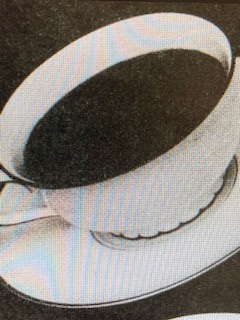
On a recent morning, I decided to grab a cup of dark roast coffee at a Starbucks I often stop at on my way to work.  A great group of young people work there and they nearly always serve up a fine brew with kindness and courtesy.  On this particular morning, however, things started going south shortly after I pulled up to the drive-through window.  I gave the young man $2.85 for my $2.84 order, and he handed me the cup of coffee.  Almost immediately, the 85 cents in coins seemed to confuse the young gentleman.  Granted, I had fished around in my change drawer to come up with a quarter, five dimes and two nickels, and the combination of coins seemed to present quite a challenge to his powers of arithmetic.  Eventually, he had to pull out a calculator to finish the job.  In the meantime, I’m sitting there feeling like the lord of all tightwads while waiting for my penny in change, but I didn’t want to just drive off because sometimes I screw up and hand over the wrong amount.  As I waited, however, a foul odor that can only be described as the smell of decomposition began to fill the inside of my car.  Penny in hand, I began to pull away as the odor of dead, decaying animal carcass grew in power and potency.  Thinking perhaps some varmint had crawled up under the hood and died, and the vent was blowing the smell into the cab, I quickly turned off the fan.  But this did nothing to stifle the inescapable smell of death that now surrounded me.  Then my attention turned to the cup of coffee.  I picked it up and took a sniff.  The horror!  From what ancient crypt did this foul brew flow?  Quickly, I weighed my options.  There was no way I was going to drink this roadkill roast that currently sat in my cup holder.  But I couldn’t survive a morning of work without a cup of joe.  Fortunately, another coffee shop lay up ahead and I swerved into their lot.  After pouring the java of death into a sewer grate, I went inside and explained my predicament to the young ladies behind the counter.  They set me up with a fresh cup of brew for which I tipped them generously.  I held the steaming cup to my nose and took a big whiff.  Ahh, it smelled like charred wood and fresh dirt, just the way I like it.

People are talking about all the times they were “quiet baked” at work and the internet is buzzed

Quiet quitting, quiet firing, quiet hiring, it seems you can’t pick up the internet these days without reading about how the workplace is being transformed in very subtle ways by Millenials and Gen Z.  

Sensing a change in attitudes about how we think and talk about work, Gen Xers are also beginning to unburden themselves regarding the unspoken practices they’ve brought to their working routine.  

“I’ve been ‘quiet baked’ at work for decades,” said Roger Ambrose, a line cook at a very upscale Chicago eatery.  “I used to wait until my shift was over to fire up a bowl, but eventually I just said, ‘fuck that.’  I need to establish a more healthy work/life balance.” 

So Roger started getting baked before work, at break and sometimes even in the restroom.  But rather than ask his supervisor for permission, Roger took it upon himself to quietly carve out a little time for himself to attend to his mental health. 

“Well, the truth is, my boss was getting super stoned as well.  I mean, he was so bloodshot and pie-eyed, I just figured he’d never notice if I snuck a toke or two,” Roger said.

“‘Quiet baking’ is a rejection of extreme ‘hustle culture,’” said leadership expert and Tik Tok guru Emily Armstrong.  “These workers are turning their back on the notion that if they go above and beyond their regular duties, then they will be rewarded with raises, bonuses and promotions.”     

“That sounds about right,” said Roger.  “Often I make sure I get a little ‘quiet compensation.’  As long as I get the waitstaff ‘quiet baked,’ they don’t notice if a few bucks go silently missing from the tip jar.”

Ryder Cup and the spirit of Seve

After making things interesting for a few hours during Sunday’s singles matches, the United States Ryder Cup team once again experienced defeat at the hands of their European counterparts.  Unlike previous years, you can’t say that “on paper” the Americans had a clear advantage over the Euros.  Rocking a top three power trio of Jon Rahm, Rory McIlroy and Viktor Hovland, the Euros posed a massively formidable challenge on their home soil.  Commentators pointed to match ups and course set up as tipping the playing field slightly in the European direction, but Golf Channel commentator and former Ryder Cup captain, Paul McGinley, kept returning to one strategy that he felt really made the difference.  Time and again McGinley pointed to engaging the heart as the most important strategy for eliciting the finest play out of the European squad.  And the primary method of engaging the heart was through invoking the spirit of Seve.  

On opening day, Seve’s presence was loudly proclaimed when fans unfurled a colossal Seve banner that covered an entire section of bleachers next to the first tee.  On Golf Channel, McGinley revealed to his fellow commentators that one of Seve’s old Ryder Cup jerseys hung in the Euro locker room to further inspire and engage the hearts of the players.  If these invocations of the spirit of Seve were not enough, McGinley revealed that on the reverse side of the European logo adorning the left breast of the player’s shirts was an image of the great golfing Spaniard.  The image of Seve literally covered the player’s hearts, as if his spirit was speaking directly to their hearts.  When McGinley spoke of the significance of engaging the hearts of the player’s, he was not just paying lip service.  For some, all of this may have seemed a bit melodramatic, over the top, or even a bit loony.

Yet no one could argue that the European team didn’t come out on fire.  Inspired by the spirit of Seve, they were performing signs and wonders.  They were chipping in and holing long putt after long putt.  At times, they were literally chuckling and shaking their heads in disbelief at how well they and their teammates were playing.  This is not to say that the disembodied presence of Seve Ballesteros hovered over the golfers manipulating them into great play like they were golfing marionettes.  However, whether you call it group mind or collective consciousness or “being on the same page,” the European team designed, assembled and harnessed a spirit of greatness and excellence, symbolized by Seve, that became manifest in their exceptional play.  At times, it all seemed shockingly pagan. 

When the match ended and the Euros were victorious, most of the players pointed to playing for their teammates, not wishing to let them down.  Playing for their country, for Europe, for past European champions, for the tradition of the Ryder Cup, all of it came to be symbolized in the spirit of Seve and they felt it in their souls.  They played not for individual glory but for completely selfless reasons, for a spirit that brought out their best and allowed them to achieve something that none of them could have attained acting individually. 

It is not unusual for people to talk about spirit when they talk about sport.  They talk about team spirit, or the spirit of the game.  Outside of sports, though, what are we all playing for?  In this era of deconstruction and dismantling, are the spirits that animate our lives ones of cooperation, tradition, striving for a higher purpose and bringing out the best in one another?