Washed up NFL QBs deployed to streets of American cities

In an effort to combat the chaos brewing in America’s largest cities, federal officials are considering deploying former NFL quarterbacks and intoxicated sports announcers to the nation’s streets to quell disorder. 

“We just want to get them out there and try to turn down the temperature a little bit,” one official noted.

Over the weekend, former Jets quarterback Mark Sanchez was out patrolling the streets of Indianapolis, Indiana, hunting for ne’er-do-wells, when he encountered an individual he thought was attempting to steal used cooking oil from a downtown hotel. 

Sanchez confronted the man and body slammed the 69-year-old in an alley behind the hotel.  It turns out the man was a legitimate grease truck driver who was authorized to remove the grease from the hotel.

“Mr. Sanchez trusted his instincts on this one and turned out to be wrong, but you got to like his spunk and desire to sniff out the bad guys,” the official said.  

Police noted that prior to his encounter with the grease truck driver, Mr. Sanchez had altercations with two sanitation workers and a document shredder, who all abandoned their suspicious activity when confronted by Sanchez. 

As Sanchez lay in bed this morning feeling like he’d been sacked by a Mack Truck, he remarked to reporters that he wished he was better at avoiding trouble than he was at evading defenses.

Forty Years Unsolved: The Abduction and Murder of Peggy Sue Altes

Forty years ago on November 12, 1984, eleven-year-old Peggy Sue Altes was abducted from Porter Park in Indianapolis, Indiana.  Five days later her nude body was discovered by hunters in a field off Jacobi Road in Hancock County, Indiana.  She had been sexually assaulted, brutally stabbed in the neck and left for dead.

Peggy Sue’s brother-in-law, Jerry Watkins, was wrongfully convicted and served fourteen years for her murder, despite having a solid alibi and a blood type that excluded him as her attacker.  Watkins was exonerated in 2001 when DNA evidence pointed to another man, Joseph Mark McCormick, as the man who sexually assaulted Peggy Sue.  Turns out, Joseph Mark McCormick lived across the street from the park where Peggy Sue was abducted.  

November 12, 1984 was Veterans Day and Peggy Sue had the day off of school.  She went to a neighborhood friend’s house while her mother and sister went to a church meeting.  When Peggy Sue’s friend wasn’t at home, she went to Porter Park to enjoy some play time.  At around 2:30 in the afternoon she was seen playing with two other boys who were also in the park that day.

A delivery driver in the area witnessed Peggy Sue get pulled into a black Camaro against her will.  He was able to provide an accurate description of Peggy Sue and the clothes she wore that day.  The witness described the black Camaro as having gray stripes that ran the length of the car along the door handles.  The car had rust over the rear wheel well, a blue interior, and a piece missing from a wing on the back of the car.  The witness described the driver of the Camaro as having a mustache and black curly hair that puffed out in the back.   

Additionally, information contained in Judge David Hamilton’s decision freeing Jerry Watkins revealed detectives were looking at two sets of brothers, the Munsons and the Beevers, who may have had knowledge or been involved in the abduction.  According to Hamilton, the investigator’s “notes on the Munsons and the Beavers reflect a confusing and sordid account of drug use, knives, violence, and adult men having sex with under-age girls.”

By August, 2001, Joseph Mark McCormick was sitting in the Hancock County jail charged with murder, felony murder and two counts of child abuse to which he pleaded not guilty.  At McCormick’s September, 2001, bond hearing, Kenneth Wayne Munson testified against McCormick, at one point telling the defense attorney, “I saw your client rape that baby.”  During testimony, and through conversations with investigators, Munson revealed his own involvement in the abduction and murder.  Detectives knew Munson had to have been involved because he was able to lead investigators to the exact location of the murder.

Despite the presence of McCormick’s semen on vaginal swabs taken from Peggy Sue, and a witness willing to testify against him, McCormick was allowed to plead down to child molesting and received a mere six years in prison.  For Kenneth Munson’s part, even though he was clearly involved in the kidnapping and admitted pushing Peggy Sue to the ground and stabbing her, he was allowed to plead down to conspiracy to commit criminal confinement resulting in serious bodily injury of a child.  He faced a potential 20 year sentence, but he only got six. 

The dropped charges and light sentences were contingent on McCormick and Munson testifying against William Beever, who they claimed delivered the fatal stab wounds to Peggy Sue’s neck.  However, William Beever was never brought to trial.  Prosecutors decided McCormick and Munson lacked credibility and eventually dropped the charges against Beever.  Well played, Hancock County.

I’m just a true crime dipshit who likes to read old newspapers.  I have no education, experience or training in how to build a case, bring it to trial or prosecute.  But you’ve got two suspects who are clearly involved in this crime through DNA and knowledge of the facts and circumstances of the crime itself.  While their stories don’t align on every detail, they’re mostly consistent and partially backed up by other witnesses.  It just seems like there should have been some way to hang a felony murder charge on this whole pack of scumbags, no matter who actually delivered the fatal knife blows.  How could prosecutors allow these men to escape justice for this awful crime?  Are detectives still investigating, and is there currently any effort being made to hold all involved accountable?     

It’s been forty years since Peggy Sue Altes lay in that Hancock County field dying from this savage attack.  Confused and full of fear, surrounded by monstrous figures, she could never have anticipated the evil that would come for her as she innocently played at the park on her day off from school.

“If somebody was going to stab you, wouldn’t you cry or scream?  Can you imagine a child being in fright, scared to death?” Myrlene Altes told the Indianapolis Star.

A memorial written for Peggy Sue on her Find A Grave page reads in part:

“Growing up in Indianapolis, Peggy Sue’s life was much like that of any other child in America’s heartland. She was a fifth-grader at School 48, known for her blondish-brown hair and her bright, engaging smile. Those who knew her describe a girl full of life, a child who embraced the world with the innocence and enthusiasm characteristic of her tender age.

“Though Peggy Sue’s life was heartbreakingly short, her impact transcends the years she spent on this earth. Her story, a poignant reminder of the fragility of life and the cruelty that can befall the innocent, has resonated with countless individuals. It serves as a call to protect the vulnerable in our society and to tirelessly seek justice for victims and their families.

“As we reflect on the life of Peggy Sue Altes, we are reminded of the preciousness of each moment and the enduring impact of a single life. Though she is no longer with us, her memory continues to inspire and influence those who hear her story. May her spirit find peace, and may those who loved her find solace in the knowledge that her life, though brief, will forever be remembered.”

The inscription on her grave marker reads, “I cried – He answered.”  Indeed, God answered Peggy Sue’s cries during those final terrifying moments and pulled her into His loving arms.  When are investigators going to answer her cries and bring some measure of justice and resolution to this awful case?


Predator in the park Part 1

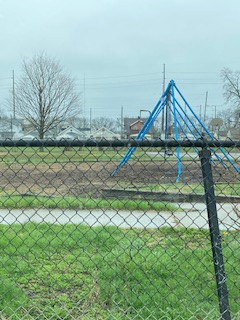
Hidden behind working-class homes on the eastside of Indianapolis, Porter Park isn’t visible from the city streets that surround it.  If you’re driving on English Avenue by the Greater Shepherd Baptist Church, you might catch a glimpse of the park behind the church’s parking lot.  Otherwise, you could pass it everyday and never know it exists.  Maybe the city prefers it that way, because the park looks more like a municipal afterthought than a destination for fun and excitement.  Surrounded by a crooked chain link fence, the park boasts some swings, a basketball court, a jungle gym and a large open field.  The only way to access Porter Park is via the aforementioned church parking lot or the nearly hidden alleyways that split off of Hamilton Avenue or St. Paul Street.  Undoubtedly, it is a source of amusement for the neighborhood children, but it lacks a parking area, and there is little chance any area family loads up the minivan and heads out for an afternoon of laughter and thrills at Porter Park.   

But Porter Park is where 11-year-old Margaret “Peggy Sue” Altes found herself on the afternoon of Monday, November 12, 1984.  It was Veterans Day and a school holiday.  Peggy Sue had left her home at 442 St. Peter Street around 1:00 p.m. to meet a friend at a neighboring residence where the friend’s grandmother resided, while Peggy Sue’s mother and sister attended a church revival.  However, when no one answered the door at the residence, Peggy Sue did what a lot of kids did in those days, she went to the local playground to pass the time and connect with neighborhood friends.  Around 2:30 that afternoon, Peggy Sue was seen playing in the park with a couple of neighborhood boys.  Peggy Sue was a fifth-grader at School 48.  She was five foot tall with blondish brown hair.  She wore a white furry jacket, burgundy corduroys and blue tennis shoes.  A witness saw her playing on the swings.  By all accounts she was taking full advantage of time away from teachers and parents to have a carefree day of play and fun.

However, there were others in this neighborhood who were also taking the day off.  Not because they were honoring those who had nobly served their country, but because for these men of low character most days were an exercise in scoring dope and getting high, or swigging whisky and getting wasted on a weekday afternoon.  And if that is all they did and they confined their activities to the dark places, the seedy bars and grubby apartments that concealed their shabby and disordered lives, then maybe their weakness of character could be forgiven.  But men like these are not content to stay in the shadows.  They are jackals hunting the weakest prey, stalking innocent lives for their own vile and twisted pleasure.

One of these jackals was creeping through the streets surrounding Porter Park in a black Chevy Camaro.  A witness described seeing Peggy Sue enter the passenger side of the vehicle.  The witness, a delivery driver whose schedule routinely brought him to the area, said Peggy Sue was forced to get into the car.  He told authorities, “she didn’t want to get in, he grabbed her by the sleeve.”  The witness described the black Camaro as having gray stripes that ran the length of the car along the door handles.  The car had rust over the rear wheel well, a blue interior, and a piece missing from a wing on the back of the car.  The witness described the driver of the Camaro as having a mustache and black curly hair that puffed out in the back.

The parents of Peggy Sue Altes did not realize their daughter was missing until 7:00 p.m. when they received a phone call from the family of the friend she was supposed to have met that afternoon.  Peggy Sue’s family immediately began searching the area and reported Peggy Sue missing to police around 11:15 that night.  In the days that followed, the search continued with family, friends and church members joining in to search neighborhood streets and abandoned buildings.  A flier bearing Peggy Sue’s name, age and description was distributed to neighborhood businesses imploring anyone who had seen her to contact “missing persons.”  However, family members charged that the police response was nearly non-existent with Peggy’s brother James telling the Indianapolis Star, “they haven’t done all they could do.”  IPD detectives didn’t exactly dispute James’ claim, responding that they had entered Peggy Sue’s name and description into a state and a national database, which apparently constituted the extent of investigative effort for locating missing eleven-year-olds at the time.   

Peggy Sue’s nude body was discovered by hunters in a Hancock County field around 10:00 a.m. the following Saturday, November 17, 1984.  Although reports initially claimed she had been shot, it was later confirmed that she had been stabbed in the neck.  Her body was located about 100 yards off Jacobi Road just north of County Road 300S in Hancock County.  A group of hunters had parked their truck just off the road and we’re following a path on foot back to a wooded area.  About a hundred yards in they discovered the body of Peggy Sue lying face up along the path.  The four men quickly returned to their truck and drove to a nearby house where the owner immediately contacted Hancock County Sheriff’s Deputy Jim Bradbury who was a resident of the area.  

Hancock County investigators were on the scene by 11:00 a.m.  There they discovered that the path leading back to the scene was deeply rutted with tire tracks.  In some places, the ruts were more than 12 inches deep, indicating a vehicle may have become stuck in the mud at some point.  Investigators made plaster casts of the tire tracks.  They also photographed the scene extensively and recovered several items, including a thin gold bracelet.  Present at the scene were Hancock County Prosecutor Larry Gossett and Deputy Coroner Fred Counter.  Sheriff Detective Technician Bill Applegate and Captain Malcolm Grass supervised the evidence gathering.  Around 3:00 that afternoon, Counter and Applegate assisted as Peggy Sue’s body was carefully sealed in sterile wrappings and transported to Wishard Hospital in Indianapolis for autopsy.  Investigators concluded that Peggy Sue had been murdered at the scene because her hand was found to be clutching grass and weeds, and initially they thought her death had been quite recent.  While awaiting autopsy results, Hancock County Sheriff Nick Gulling told reporters, “Until we get those results, we’re operating under the assumption that we had Saturday, and that is that she died sometime Friday night or Saturday morning.”

That she may have been killed the morning of her body’s discovery seems like a pretty startling assertion.  Based on their assessment of the crime scene and the condition of the body, homicide investigators, a crime scene tech and the county coroner were of the opinion that she likely died within the previous 24 hours, maybe even a mere few hours prior to discovery.  That would mean that she had to have been held somewhere in the intervening days since her abduction Monday afternoon.  

The autopsy report would tell a different story, although it would fail to nail down conclusively when Peggy Sue Altes was slain.  Forensic pathologist Dr. John Pless would conclude that she died of knife wounds to the left side of her neck that severed a jugular vein and carotid artery.  No other wounds were indicated other than some superficial cuts.  There was evidence of rape which included the presence of semen in her vagina and a tear caused by penetration.  The time of death was estimated to be at least 48 hours prior to the discovery of her body.  

Perhaps investigators could be forgiven for being a few days off on the time of death.  After all, it was November, so cold temperatures probably made it difficult to determine with any degree of certainty.  But, in retrospect, crime scene investigators’ failure to distinguish a stab wound from a gunshot wound may have revealed a lack of experience, if not a lack of competence, and that misstep may have proven to be a rather ominous sign of investigative failures to come.  Because this is a case where poor decisions on the part of investigators and prosecutors sent an innocent man to jail and allowed guilty men to walk free, all while two grieving parents eventually went to their graves having never seen justice for their slain daughter.

Sources:

The Indianapolis Star

The Indianapolis News

The Daily Reporter (Greenfield, Indiana)

Watkins v. Miller, Southern District of Indiana (2000)