
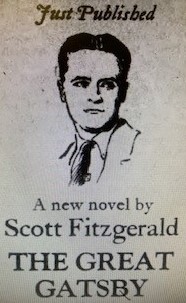
At the outset of The Great Gatsby, Nick Carraway reveals what he most admired about Jay Gatsby “was an extraordinary gift for hope, a romantic readiness such as I have never found in any other person….” Of course, at many points during the course of the story, Gatsby’s romantic illusions are met with a mixture of disbelief and mild amusement by Nick. Gatsby’s “gift for hope” and “romantic readiness” is seen as a character flaw, a naive hindrance to fitting in among the East’s leading elites. Yet, time and again, Gatsby’s visions manifest themselves in ways that not only serve his purpose, but are met with great enthusiasm by those around him. The people around Gatsby become willing players in the romantic drama he’s staging. Nick, despite his momentary reservations, becomes the most willing participant of all, sticking with Gatsby until the end, even when others have fled or forgotten him. In this way, the people who attend Gatsby’s parties, who inhabit his romantic illusion, are his own creation. They, too, possess a sort of romantic readiness that finds its reality in the gayety and riotousness of the parties Gatsby throws and the thrilling mystery he represents. They are drawn like moths to the light of his romantic vision, but soon disperse when that vision is extinguished.
According to Nick, Gatsby possesses “some heightened sensitivity to the promises of life….” Gatsby is the embodiment of this emerging American trait. The rules and norms of the old social order are on the decline. It is no longer the case that a person is born into life circumstances and a social rank from which he cannot transcend. Gatsby can dream a future and he can make it happen. In order to win back the love of Daisy, Gatsby mimics the elites into whose orbit he has positioned himself. But Gatsby’s production lacks authenticity. It is, in many respects, an artificial representation of old money status and materialism. Those who represent the old order, like Tom Buchanan, do not possess a “romantic readiness,” or a “sensitivity to the promises of life.” They inhabit the pinnacle of life’s promise and are not dazzled by Gatsby’s flashy stage production. Tom represents a cold, impenetrable reality in opposition to Gatsby’s grand, romantic aspirations, and he takes extreme diabolical pleasure in exposing the artifice of Jay Gatsby.
 If there is something