Broadway Butterfly Beatrice Fay Perkins

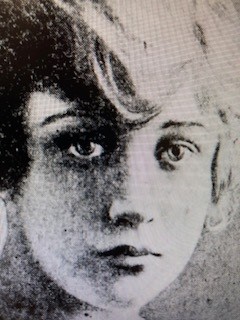
In the early morning hours of Monday, March 9, 1925, Mrs. Beatrice Fay Perkins returned to her Manhattan apartment at 168 W. 58th St., in the company of her escort, Milton Abbott, a cotton broker and family friend.  The two had been to Reuben’s, 622 Madison Ave., where late night revellers often concluded the night’s gayety with coffee and cold beef sandwiches.  There Mrs. Perkins became ill and asked Abbott to escort her home.  The pair arrived at the apartment around 3 a.m.  

A short time later, a group of masked bandits, using a crowbar and other tools,  “chopped and hacked their way into the luxurious studio apartment.”  Taking the pair by surprise, the gang of thugs first bound and gagged Mr. Abbott before setting upon Mrs. Perkins.  As Mrs. Perkins screamed, one of the robbers punched her in the mouth and grabbed her by the throat.  Another bandit grabbed her arm and twisted it as he tore a diamond bracelet and a diamond-studded watch from her wrist.  He grabbed one of her rings and tore the flesh as he ripped it from her finger.  Then her necklace was taken, and when one of her rings proved too stubborn to remove by conventional means, one of the bandits nearly bit her finger off trying to remove the ring with his teeth.  Not satisfied with the jewels they’d ripped from her body, they cursed and punched Mrs. Perkins as they demanded more loot.

“Where’s the rest of your jewelry, quick, or we’ll kill you,” one of the bandits threatened.

“For God’s sake, don’t do any more,” Mrs. Perkins moaned.  “It’s on the dressing table.  There, in that casket.”

As she lay in a broken heap on the floor, one of the men gave her a final kick while another grabbed the jewels from the dressing table.  Before they fled, the trio of bandits brutally beat Mrs. Perkins unconscious and choked her with a pillow to prevent her from crying out while they fled the scene.  Then, without so much as disturbing a hair on Mr. Abbott’s head, they warned him not to move for ten minutes after they left, or they would kill him.

Once the attackers had left the apartment, it only took Abbott a few moments to slip his bonds.  Once free, Abbott showed little compassion and rendered little aid as he merely clipped Mrs. Perkins’ wrist restraints with a pair of scissors.  Then Abbott did a very curious thing.  As Mrs. Perkins lay semi-conscious on the floor, bleeding from the severe beating she had just endured, Abbott did not call for an ambulance.  He did not run to the neighbors for help.  Nor did he call the police or summon a doctor.  No, Milton Abbott, cotton broker, neglected to undertake any action the emergency situation required and, instead, ran straight to the office of Arnold Rothstein.  

Estranged from her husband, Benjamin F. Perkins, wealthy proprietor of the Colannade Club, Beatrice Fay Perkins was described as a beautiful young woman and a frequenter of popular cabarets.  “Young, slim and beautiful, clothed in the finest Parisian creations,” Perkins earned the nickname ‘The Sleeping Beauty,’ because she wore her jewelry in bed during a hospital stay only a few weeks earlier.  

Badly beaten and abandoned by her companion, Mrs. Perkins left “a trail of blood behind her on the carpet” when she “dragged herself to the telephone” and called for help.  Meanwhile, Abbott ran the few blocks to the office of Arnold Rothstein, 45-47 W. 57th Street where he was unable to locate Rothstein at that late hour.  The following day, Mrs. Perkins told detectives, “Arnold Rothstein was the man who insured my jewels for me.  That’s why we wanted to see if he could think of any way to trace them.”

Three o’clock in the morning seems like a rather strange hour to be contacting your insurance man about stolen jewelry.  But Arnold Rothstein wasn’t just an insurance broker.  He was a leading figure in the Manhattan criminal underworld with interests in gambling, bootlegging, narcotics and stolen jewelry.  And Beatrice Fay Perkins wasn’t the first Broadway Butterfly to be severely beaten and robbed in her home.  At least two women had already lost their lives to a gang of “Butterfly Guerillas.”  However, this robbery, more than any of the others, appears to indicate that these attacks weren’t just random, unconnected events by unrelated gangs of thugs.  But rather, one individual may have been the leading figure behind all of these brutal crimes. 

Sources:

Brooklyn Daily Times

Brooklyn Eagle

Brooklyn Citizen

Dean Jobb continues to promote a false true crime narrative

In a recent interview with the Crime Writers of Canada podcast, Dean Jobb, author of A Gentleman and a Thief, doubles down on his contention that jazz-age jewel thief, Arthur Barry, crashed a Long Island cocktail party in 1924, befriended the Prince of Wales, and whisked his new royal pal off on a secret tour of Broadway speakeasies.  

The claim strains credulity, but Jobb provides the following defense:  

“I lead off with him (Arthur Barry) meeting the Prince of Wales, the future Edward the VIII, who was visiting Long Island in the twenties.  Barry crashes a party, because there were a whole bunch of Long Island parties for the prince and his entourage, and ends up meeting the prince, takes him on a clandestine tour of the bright lights of Broadway and the speakeasies.  

“I mean, a writer has to go, really?  Did this really happen?  Well, start digging into reporters.  I find memoirs or memories of reporters who covered the story, who vouch for it, who did their homework.  The coverage makes it clear that the prince disappeared right at the time Barry says he was doing this.  So, it’s a matter of digging as deeply as you need to in the record to verify for your own peace of mind.  But you owe it to the reader, and if you’re not sure, you tell the reader that.”

As I’ve shown in previous blog posts, all the contemporary newspaper accounts of the party Jobb describes have the Prince of Wales dancing at the Cosden estate until dawn and returning to the Burden estate that morning.  None mention Wales slipping away from the party to experience the nightlife of Broadway.  

Rather than belabor that point here, I’ll address the following contention:  “The coverage makes it clear that the prince disappeared right at the time Barry says he was doing this.”  The “coverage” Jobb refers to involves an episode that occurred the night following the Cosden party.  The “small but jolly” Cosden gathering described in Jobb’s book began late in the evening of Wednesday, September 3, 1924 and continued through the early morning hours of Thursday, September 4.  The period of time when Wales went missing began in the afternoon or early evening of Thursday, September 4 and continued until the next morning, Friday, September 5.

Here is the passage Jobb quotes from to show “that the prince disappeared right at the time Barry says he was doing this.”  The article was penned Thursday night, September 4, one night later than the night of the Cosden party, and appeared in the following morning’s Buffalo Courier.

“The whereabouts of the Prince of Wales were shrouded in mystery tonight.  At midnight he had not returned to the Burden estate where he is stopping.

“He had dinner at the home of J.S. Cosden…It was reported that he left the Cosden home shortly after dinner, but since that time he has been playing a game of hide and seek with those who sought to check his movements.

“Some believe he went for a boat ride up Long Island Sound, others say he attended an all-night dance party at some nearby home, but others believe he went in disguise to one of the white light jazz palaces on Broadway.”

Not only does this passage describe a different night from that of the late-night Cosden party, it describes a completely different set of events.  Wales had dinner at the Cosden home and he left, possibly by boat, and either went to a party or to check out the white light jazz palaces of Broadway.  He’s not fleeing a late night party, he’s leaving after having dinner.  How does Jobb not recognize that these are not only separate dates but separate events as well?  

While the order of events may seem a little confusing to someone unfamiliar with the Prince’s 1924 visit, it isn’t to someone who has casually researched the topic, and it shouldn’t be confusing to someone who has researched and written a work of nonfiction where an alleged encounter between Arthur Barry and the Prince of Wales plays a central role.

The prince’s movements over the 24 hours in question go something like this:  Wales attends a late night party at the Cosden estate and dances until dawn.  He then returns to the Burden estate and sleeps until around noon.  Then he goes to the polo fields for the afternoon.  Sometime in the late afternoon, he returns to the Cosden estate where he either plays golf or takes a stroll around the Cosden’s nine hole golf course.  Then he eats dinner, hops in a motorboat, and disappears off into the Long Island Sound.  From there his whereabouts are unknown for the next 12-24 hours. 

These events are widely covered by the newspapers of the day.  Here’s a question the New York Daily News posed regarding the prince’s missing hours:

“What the folk down Long Island way wanted to know was where the prince passed the time from 2 p.m. Thursday until his reappearance yesterday.”

Does that sound like Wales stole away from a late night party with a stranger he just met, or does it make more sense that he went missing the following afternoon?  How does Jobb miss that unless he’s intentionally taken the route of ignoring the truth and printing the legend?

A small but jolly gathering

In September of 1924, Edward, the Prince of Wales, made a much publicized visit to the United States.  To call it “much publicized,” however, fails to adequately describe the media frenzy that accompanied his visit.  The press hounded Wales mercilessly, reporting on his every movement: where he dined, where he danced, where he played, how long he slept, when he rose.  The press of the day literally tried to account for every moment of his time on American soil.  

While in the states, Wales spent almost the entirety of his visit among the American aristocracy of Long Island, New York.  Most nights, Wales and his entourage, which included the Lord and Lady Mountbatten and Mrs. Richard Norton, were entertained at some lavish Long Island affair where they danced and partied until the wee hours of the morning.  

One of these luxurious all-nighters took place at the estate of Joshua S. Cosden, a prosperous oil man who rose from very humble beginnings to become one of the richest men in America.  It is this party that plays a prominent role in the forthcoming Dean Jobb true crime book, A Gentleman And A Thief.  The book tracks the life and criminal endeavors of jazz age gentleman jewel thief Arthur Barry, who Jobb credits as the chief culprit behind the Cosden jewel robbery, which occurred during the royal visit of 1924.  

In addition to being a critically acclaimed true crime author, Jobb is a professor emeritus at the University of King’s College where he specializes in creative nonfiction.  Indeed, Jobb describes his true crime books as works of creative nonfiction, meaning he’s sticking to the facts, but utilizing a creative narrative-driven presentation.

Although Gentleman And A Thief doesn’t officially release until next month, the prologue of the book is available for sampling on Amazon’s website.  The narrative dives straight into the Cosden party and Arthur Barry’s alleged presence there.  According to Jobb, “It was there, in the midst of what one press report termed a ‘small but jolly’ gathering, that Gibson (Arthur Barry) met the prince.”  Jobb’s prologue also describes in some detail Wales’ alleged surreptitious late night journey to a couple of notable Manhattan speakeasies.  Whether or not these events actually took place at all, and that point is definitely up for debate, one thing for certain is the events could not have taken place as Jobb describes them.

The Cosden party Jobb describes took place during the late night hours of Wednesday, September 3, 1924 into the early morning hours of September 4.  The Thursday, September 4 edition of the Brooklyn Daily Eagle reports, “Last night the Prince shared honors with polo players of both the British and American international teams at a stag dinner given for them at the Piping Rock Club at Locust Valley.”  Will Rogers entertained the group with a 20 minute monologue, and according to the Daily Eagle account, “After the dinner the Prince left for a dance.”  Earlier in the article it read, “It was another dancing party which kept Wales out all night, this time at the home of Mr. and Mrs. J. S. Cosden at Sands Point.  The party was a small but jolly one.  Other guests included Lord and Lady Mountbatten, Lord and Lady Milhaven and the Hon. Mrs. Richard Norton.”

This “small but jolly” account of the Cosden party got picked up by the Associated Press and appeared in newspapers across the country.  The problem with Dean Jobb’s depiction of that night is that not only did Wales not leave the party with Arthur Barry, but Wales’ alleged secret excursion into Manhattan nightlife took place the following evening. 

Popular journalist of the day Grace Robinson wrote on September 4:  “Before inspecting his third Long Island sunrise from the Cosden Manor, the prince had been with the Piping Rock Club at a gay stag….After the stag, the prince went to the Cosdens where he danced until morning.  And along went Lord and Lady Mountbatten, Lord and Lady Milford Haven and the rest of the who’s who.”  This account is interesting because years later it will be Grace Robinson pushing the Arthur Barry story that he left the Cosden party with the prince.

So contemporary accounts of the “small but jolly” Cosden party make no mention of the Prince slipping away.  That’s because Wales’ alleged foray into Manhattan occurred the following evening.  On Friday, September 5, 1924, the newspapers were buzzing with speculation over the whereabouts of Wales between 2:00 to 5:00 Thursday afternoon September 4 and the early morning hours of Friday, September 5.  Rumors start flying about Wales’ possible attendance at the El Fey Club 107 West 45th street, Manhattan, because a car bearing a license plate traced back to the Burden estate, where Wales was lodged, was seen near the club in the early morning hours of Friday, September 5.  Despite denials by the club owner and the prince’s spokesperson that his grace had not graced the club’s premises, rumors persisted.  

Jobb quotes a newspaper account which read, “he went in disguise to one of the white light jazz palaces on Broadway.”  This account appears in Friday, September 5 newspaper editions, speculating as to the Prince’s whereabouts the previous evening into early morning.  It concerns a time period a full 24 hours after the Cosden party where Arthur Barry, alias Dr. Gibson, allegedly lured Wales away to the “White Light Belt.” 

Whether or not Wales pulled a Manhattan Holiday and stealthily eluded the press and his handlers to bask in the white light of Broadway was unclear at the time and remains unclear today.  However, what is clear is that the account depicted in Jobb’s book could not have happened the way he described it.  Maybe there was some other Cosden party that Arthur Barry lured His Royal Highness away from, but it wasn’t the “small but jolly” one.  

If it can be shown that I’m confusing my dates, I’ll be happy to admit my error.  However, it seems pretty clear that the specific events Jobb references did not take place on the same night.  At any rate, I’m looking forward to reading the rest of Jobb’s book.  The Cosden case and other area gem thefts have been of great interest to me for quite some time, and I’m anxious to learn what else Jobb has uncovered.