Predator in the Park: The Abduction and Murder of Peggy Sue Altes

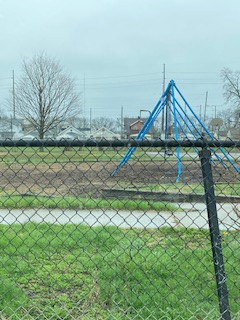
Porter Park

Hidden behind working-class homes on the eastside of Indianapolis, Porter Park isn’t visible from the city streets that surround it.  If you’re driving on English Avenue by the Greater Shepherd Baptist Church, you might catch a glimpse of the park behind the church’s parking lot.  Otherwise, you could pass it everyday and never know it exists.  Maybe the city prefers it that way, because the park looks more like a municipal afterthought than a destination for fun and excitement.  Surrounded by a crooked chain link fence, the park boasts some swings, a basketball court, a jungle gym and a large open field.  The only way to access Porter Park is via the aforementioned church parking lot or the nearly hidden alleyways that split off of Hamilton Avenue or St. Paul Street.  Undoubtedly, it is a source of amusement for the neighborhood children, but it lacks a parking area, and there is little chance any area family loads up the minivan and heads out for an afternoon of laughter and thrills at Porter Park.   

But Porter Park is where 11-year-old Margaret “Peggy Sue” Altes found herself on the afternoon of Monday, November 12, 1984.  It was Veterans Day and a school holiday.  Peggy Sue had left her home at 442 St. Peter Street around 1:00 p.m. to meet a friend at a neighboring residence where the friend’s grandmother resided, while Peggy Sue’s mother and sister attended a church revival.  However, when no one answered the door at the residence, Peggy Sue did what a lot of kids did in those days, she went to the local playground to pass the time and connect with neighborhood friends.  Around 2:30 that afternoon, Peggy Sue was seen playing in the park with a couple of neighborhood boys.  Peggy Sue was a fifth-grader at School 48.  She was five foot tall with blondish brown hair.  She wore a white furry jacket, burgundy corduroys and blue tennis shoes.  A witness saw her playing on the swings.  By all accounts she was taking full advantage of time away from teachers and parents to have a carefree day of play and fun.

However, there were others in this neighborhood who were also taking the day off.  Not because they were honoring those who had nobly served their country, but because for these men of low character most days were an exercise in scoring dope and getting high, or swigging whisky and getting wasted on a weekday afternoon.  And if that is all they did and they confined their activities to the dark places, the seedy bars and grubby apartments that concealed their shabby and disordered lives, then maybe their weakness of character could be forgiven.  But men like these are not content to stay in the shadows.  They are jackals hunting the weakest prey, stalking innocent lives for their own vile and twisted pleasure.

One of these jackals was creeping through the streets surrounding Porter Park in a black Chevy Camaro.  A witness described seeing Peggy Sue enter the passenger side of the vehicle.  The witness, a delivery driver whose schedule routinely brought him to the area, said Peggy Sue was forced to get into the car.  He told authorities, “she didn’t want to get in, he grabbed her by the sleeve.”  The witness described the black Camaro as having gray stripes that ran the length of the car along the door handles.  The car had rust over the rear wheel well, a blue interior, and a piece missing from a wing on the back of the car.  The witness described the driver of the Camaro as having a mustache and black curly hair that puffed out in the back.

The parents of Peggy Sue Altes did not realize their daughter was missing until 7:00 p.m. when they received a phone call from the family of the friend she was supposed to have met that afternoon.  Peggy Sue’s family immediately began searching the area and reported Peggy Sue missing to police around 11:15 that night.  In the days that followed, the search continued with family, friends and church members joining in to search neighborhood streets and abandoned buildings.  A flier bearing Peggy Sue’s name, age and description was distributed to neighborhood businesses imploring anyone who had seen her to contact “missing persons.”  However, family members charged that the police response was nearly non-existent with Peggy’s brother James telling the Indianapolis Star, “they haven’t done all they could do.”  IPD detectives didn’t exactly dispute James’ claim, responding that they had entered Peggy Sue’s name and description into a state and a national database, which apparently constituted the extent of investigative effort for locating missing eleven-year-olds at the time.   

Peggy Sue’s nude body was discovered by hunters in a Hancock County field around 10:00 a.m. the following Saturday, November 17, 1984.  Although reports initially claimed she had been shot, it was later confirmed that she had been stabbed in the neck.  Her body was located about 100 yards off Jacobi Road just north of County Road 300S in Hancock County.  A group of hunters had parked their truck just off the road and we’re following a path on foot back to a wooded area.  About a hundred yards in they discovered the body of Peggy Sue lying face up along the path.  The four men quickly returned to their truck and drove to a nearby house where the owner immediately contacted Hancock County Sheriff’s Deputy Jim Bradbury who was a resident of the area.  

Hancock County investigators were on the scene by 11:00 a.m.  There they discovered that the path leading back to the scene was deeply rutted with tire tracks.  In some places, the ruts were more than 12 inches deep, indicating a vehicle may have become stuck in the mud at some point.  Investigators made plaster casts of the tire tracks.  They also photographed the scene extensively and recovered several items, including a thin gold bracelet.  Present at the scene were Hancock County Prosecutor Larry Gossett and Deputy Coroner Fred Counter.  Sheriff Detective Technician Bill Applegate and Captain Malcolm Grass supervised the evidence gathering.  Around 3:00 that afternoon, Counter and Applegate assisted as Peggy Sue’s body was carefully sealed in sterile wrappings and transported to Wishard Hospital in Indianapolis for autopsy.  Investigators concluded that Peggy Sue had been murdered at the scene because her hand was found to be clutching grass and weeds, and initially they thought her death had been quite recent.  While awaiting autopsy results, Hancock County Sheriff Nick Gulling told reporters, “Until we get those results, we’re operating under the assumption that we had Saturday, and that is that she died sometime Friday night or Saturday morning.”

That she may have been killed the morning of her body’s discovery seems like a pretty startling assertion.  Based on their assessment of the crime scene and the condition of the body, homicide investigators, a crime scene tech and the county coroner were of the opinion that she likely died within the previous 24 hours, maybe even a mere few hours prior to discovery.  That would mean that she had to have been held somewhere in the intervening days since her abduction Monday afternoon.  

The autopsy report would tell a different story, although it would fail to nail down conclusively when Peggy Sue Altes was slain.  Forensic pathologist Dr. John Pless would conclude that she died of knife wounds to the left side of her neck that severed a jugular vein and carotid artery.  No other wounds were indicated other than some superficial cuts.  There was evidence of rape which included the presence of semen in her vagina and a tear caused by penetration.  The time of death was estimated to be at least 48 hours prior to the discovery of her body.  

Perhaps investigators could be forgiven for being a few days off on the time of death.  After all, it was November, so cold temperatures probably made it difficult to determine with any degree of certainty.  But, in retrospect, crime scene investigators’ failure to distinguish a stab wound from a gunshot wound may have revealed a lack of experience, if not a lack of competence, and that misstep may have proven to be a rather ominous sign of investigative failures to come.  Because this is a case where poor decisions on the part of investigators and prosecutors sent an innocent man to jail and allowed guilty men to walk free, all while two grieving parents eventually went to their graves having never seen justice for their slain daughter.

Wrongful Conviction

After a year in which there seemed to be little movement in the Peggy Sue Altes murder investigation, suspicions came to rest squarely on the brother-in-law, Jerry Watkins.  Two days prior to Peggy Sue’s disappearance, Watkins was caught by his wife, Janice, molesting the girl in the couple’s living room as Peggy Sue watched cartoons.  According to his testimony at trial, it was the “second or third time” he had molested Peggy Sue, and he also admitted molesting another Altes sister on multiple occasions.  Janice moved out of their home that Saturday, but the couple reconciled the following day after Watkins made a public admission to the family that he had molested Peggy Sue.  That weekend, Watkins cut his hair and shaved his beard for the first time in several years.  He expressed an interest in attending church with Janice and appeared ready to turn his life around.  The next day, Peggy Sue went missing.  

Eventually, the timing of the Watkins’ disclosures just prior to Peggy Sue’s abduction, rape and murder would seem like too much of a coincidence to overlook for both the family and authorities.  However, other than the admissions of molestation, there was no evidence to link Watkins to Peggy Sue’s murder.  On August 14, 1985, Jerry Watkins pleaded guilty to molesting Peggy Sue.  Additional charges of assaulting a five-year-old boy were dropped as part of the plea agreement.  Watkins was sentenced to serve two years at the Indiana State Farm, but ended up serving only five months after a judge reviewed his case and released him early.

It wasn’t long after Watkins’ release from prison that he was arrested and charged with the murder of Peggy Sue.  Following the arrest, Hancock County Sheriff Nick Gulling revealed that Watkins had been the focus of authorities since “the initial stages of the investigation.”  Gulling went on to disclose that a search warrant had been served at the Watkins’ home shortly after Peggy Sue’s body was discovered.  Additionally, investigators searched Watkins’ car and drew his blood for testing and comparison. Results of testing came back negative or inconclusive.  Sheriff Gulling admitted the search netted “some evidence, but I’m not sure it was critical evidence.”  Indianapolis Police Department investigator Alda Kaiser echoed the notion that the investigation zeroed in on Jerry Watkins almost immediately.  “I’ve always felt the molesting disclosure had something to do with her murder,” Kaiser told reporters.   

Clearly, Watkins is someone investigators would want to take an intense look at due to his ongoing abuse of Peggy Sue and her sister.  But it seems like investigators went all in on Watkins to the near exclusion of other investigative leads, despite having no evidence against him.  According to Sgt. Louis J. Christ of the Indianapolis Police Department, “Our primary thought throughout the entire investigation was to try and locate physical evidence to connect the perpetrator to the crime.  From the very beginning we came to the realization that we had no real evidence to tie the perpetrator to the crime.  Anything we found we processed through the lab, but we had no identifying evidence.” 

So how were authorities able to execute an arrest on Jerry Watkins?  What was the crucial piece of evidence that dropped in their lap tying Watkins to the crime?  Enter jailhouse snitch Dennis Ackeret.  According to Ackeret, on August 14, 1985, he shared a cell with Jerry Watkins in the City-County building while Watkins awaited sentencing for his Marion County molestation conviction.  At that time, Watkins told Ackeret that he had killed a girl, slashed her throat and dumped her in some bushes in Hancock County.  This was the big break investigators had been waiting for.  They had their confession and didn’t seem to mind that it was made not to authorities, but to another inmate.

Watkins went on trial in September of 1986.  The prosecution’s case relied almost exclusively on the jailhouse confession and their ability to poke holes in Watkins’ alibi.  Dennis Ackeret was the star witness, describing for the jury a distraught Watkins so wracked with guilt that he felt compelled to unburden himself to a cellmate, Ackeret, whom he had just met.  The defense pointed out that Ackeret was a thief and a forger, and that he had previously worked as a paid police informant.  Other defense witnesses testified that Ackeret made up the story to get a reduced sentence, and that Ackeret boasted about how to become a state’s witness by researching crimes in the newspaper.

Forensic pathologist Dr. John Pless, who conducted the autopsy on Peggy Sue, testified that she died from 15-20 stab wounds to the left side of her neck.  Some of the wounds severed a jugular vein and a carotid artery.  The doctor testified that Peggy Sue had abrasions on her hands and neck, plus a bite mark on one of her breasts.  Additionally, there were other wounds that indicated a sexual assault had taken place.  Regarding time of death, Pless could be no more specific than sometime between the day of her disappearance and the day before discovery of her body.  While there was no murder weapon presented, prosecution witnesses testified that Watkins was sometimes seen carrying a knife at work and at church. 

Watkins himself took the stand.  His testimony focused mostly on denying the accusations made by other witnesses and establishing an alibi for the day of the abduction and the days that followed.  Watkins testified that he had worked from 7:00 a.m. until 3:30 p.m. on the day of Peggy Sue’s abduction.  His testimony was corroborated by his employer.  After work, he and his wife, Janice, moved furniture back into their house that had been removed during their brief separation.  This testimony was corroborated by Janice and Watkins’ mother.  At 7:00 p.m. the couple attended a church revival at Bethel Tabernacle 4232 S. Foltz St. Indianapolis until 10:00 p.m.  After the revival, the couple returned to Janice’s parent’s home to find out that Peggy Sue was missing and participated in the family search until 2:00 or 3:00 in the morning.  Subsequent days were spent searching, working and attending church revival meetings in the evenings.

During closing statements, Hancock County Deputy Prosecutor Pete Shumacker attacked the veracity of Jerry and Janice Watkins’ testimony.  “If you’re going to be a liar, you better have a good memory.  Janice doesn’t have a good memory and neither does Jerry.”  For prosecutors, the fountain of truth and virtue was Dennis Ackeret who wanted nothing for himself, but willingly gave testimony “as any human being with a soul that had information would come forward with it,” said Prosecutor Larry Gossett.  Furthermore, prosecutors would assert, Ackeret’s testimony had to be credible because he gave details that went unreported in newspaper accounts.  According to Prosecutor Gossett, newspaper articles made no mention that Peggy Sue’s jugular vein had been cut as Ackeret had testified.  In fact, Judge Richard Payne allowed newspapers to be entered into evidence to allow jurors to verify that the information could not have been gleaned from news articles.  I’m no lawyer, but this seems like a highly prejudicial move.

Despite the scarcity of evidence, Watkins was convicted and sentenced to 60 years in prison.  In the end, Watkins was an admitted child predator who had molested Peggy Sue and her older sister on numerous occasions, making him a wholly unsympathetic character in the eyes of the jury.  It is not hard to imagine how law enforcement, prosecutors and jurors would think he had to be the guy.  However, there are abundant reasons to believe that investigators should have known he wasn’t the guy.  First, during the investigation, he and Janice both passed a polygraph examination.  While not admissible in court, detectives used the exam to eliminate certain suspects.  Why wasn’t it used to clear Watkins?  Especially, since it lends credibility to what was a pretty solid alibi.  Second, tests on seminal fluid revealed that Peggy Sue’s attacker must have had type B blood.  Watkins was blood type O and Peggy Sue was type A.  How is this not evidence that the rape was commited by someone else?  Third, investigators had a witness that saw Peggy Sue get pulled into a black Camaro at Porter Park around 2:30 p.m. on November 12.  Not only did Jerry Watkins not own a black Camaro, his employer confirmed that he was at work at that time.  Apparently, this bit of evidence was not shared with the defense.  In the end, the exculpatory evidence is much weightier and far more credible than the evidence to convict.  On this knowledge alone, investigators should have known they were pursuing the wrong man and that the real killer or killers were still on the loose.  Although it would take several years and investigators would resist it tooth and nail, eventually DNA technology would set them straight, eliminating conclusively Jerry Watkins as Peggy Sue’s assailant and redirecting the focus onto a man named Joseph Mark McCormick.

Joseph Mark McCormick

With Jerry Watkins securely behind bars, the actual killers of Peggy Sue Altes were now free to pursue their depraved criminality without fear of having to answer for their bloody deeds.  For 16 years after committing this unspeakable act of evil, the murderous jackals continued to stalk the innocent while Peggy Sue’s blood stained their clothes and the sound of her cries and pleadings reverberated in their drug and alcohol soaked memory.  And despite the knowledge that Jerry Watkins could not have been Peggy Sue’s assailant, which included star witness, Dennis Ackeratt, recanting his testimony, Hancock County officials fought like hell to keep the wrong man behind bars.  

Eventually, on April 25, 2000, U.S. District Judge David E. Hamilton overturned Watkins’ 1986 conviction, citing DNA and additional evidence investigators and prosecutors failed to disclose to the defense at the time of Watkins’ trial.  In addition to the DNA evidence eliminating Watkins as Peggy Sue’s rapist, Judge Hamilton’s decision cited the eyewitness to Peggy Sue’s abduction at Porter Park, another suspect who had failed a polygraph, men who had admitted involvement in the crime to others and a man who was seen wearing bloody clothes the night of the murder all as evidence “that no reasonable jury would find Watkins guilty of murdering Peggy Sue Altes.”

Naturally, Myrlene Altes, Peggy Sue’s mother, was devastated.  “If you want a pervert out on the street, that’s what you’re going to get.  I’m very angry because this guy is dangerous,” Mrs. Altes told reporters.  It is certainly true that they were letting a pervert out onto the street.  Jerry Watkins had inflicted immeasurable and lasting damage on the Altes family, but he could not have been Peggy Sue’s killer.  Those degenerate monsters were still at large, slinking in the shadows between brief stretches behind bars for other criminal offenses.  

In August of 2001, the same DNA evidence that led to the release of Jerry Watkins shone a spotlight on one of the shadowy predators.  Joseph Mark McCormick was found to be a match to the crime scene DNA to a certainty of one person in 1.5 billion.  “We put the evidence through an analyzer and it mapped everything,” Indiana State Police DNA database supervisor Paul Misner told The Daily Reporter.  “All we did was use the computer to match the sample we had with anyone in the database.  Everyone arrested in Indiana on crimes against persons or serious offenses is required to provide a DNA sample that is kept on record.  We just did a cross match and found a match.”

McCormick, who investigators learned was living across the street from Porter Park at the time of Peggy Sue’s abduction, was “in the wind” at the time of his identification.  “He is on probation for a theft and burglary conviction in Marion County but has skipped out on his probation officer,” Hancock County Sheriff’s Department Captain Jim Bradbury told reporters.  After embarking on a reinvestigation of the case following the Watkins exoneration, Bradbury uncovered another interesting lead that was showing some promise.  “I had been talking with a confidential informant that was questioned when the original investigation was going on.  I talked with him and he began to tell me little bits about what he knew about the girl’s killing,” Bradbury said.  The informant was able to show investigators the precise location where Peggy Sue’s body was found, and according to Bradbury, “He told me things that only someone who was involved in the case would have known.”  Bradbury also revealed that the confidential informant was safely behind bars under protective custody.

Detectives also interviewed the young men who were then the young boys seen playing with Peggy Sue at Porter Park prior to her abduction.  “The original witnesses to the abduction, who were like 7 years old or 8 years old at the time, said there was more than one (abductor),” Hancock County Sheriff Nicholas Gulling told the Indianapolis Star.  “And the information we received subsequently indicates there was more than one.”  Here Gulling could be indicating that the confidential informant confirmed this piece of information.  Setting aside the DNA match, if all of these witnesses were questioned at the time of the original investigation, why weren’t they taken more seriously then?  Even if investigators felt that Watkins was involved, they had ample reason to believe that others participated as well.  Yet they discounted and even suppressed that information.  Nevertheless, authorities got a tip on Sunday, August 5, that McCormick was in attendance at a party in Morgan County.  Investigators rushed to the scene of the festivities, but a slippery McCormick had left the party by the time they got there.  They missed him by that much.

On Tuesday, August 7, 2001, 39-year-old Joseph Mark McCormick of Indianapolis walked into the Greenfield police station shortly before noon to turn himself in.  His long hair and bushy beard gave him the look of a survivalist or a former Manson family member.  He told police he did not have a permanent address and had been living in motels.  After learning that he was being sought by authorities, McCormick got a ride from a friend to the police station.  The friend, however, didn’t stick around to answer questions.  Despite turning himself in to the wrong law enforcement agency, the Greenfield Police held the bedraggled drifter until Hancock County Sheriff’s officials could arrive.

At an initial hearing, McCormick was charged with murder, felony murder and two counts of child abuse to which he pleaded not guilty.  Despite new suspects and solid evidence connecting Joseph McCormick to the crime, Hancock County still wasn’t finished trying to put Jerry Watkins back behind bars.  “We have seen a lot of twists and turns in the case.  The tests show that Jerry Watkins didn’t have anything to do with the sexual assault.  That doesn’t mean he didn’t kill her but it does point to McCormick,” said Hancock County Prosecutor Terry Snow, seemingly unable to decide whether to state his case emphatically or undermine it by not letting go of Watkins as a suspect.  While indicating that other arrests were possible, Captain Jim Bradbury agreed with Snow that the investigation still included Jerry Watkins.  “We are still not done yet,” Bradbury told reporters.

Indeed, they weren’t done, not by a long shot, and not letting go of Jerry Watkins as a suspect was just the beginning.  Investigators and prosecutors were just getting started on their clumsy efforts to sabotage their own case, practically ensuring that none of the men responsible for the rape and brutal stabbing of Peggy Sue Altes would do time for her murder.

Kenneth Wayne Munson

With a confidential informant in sheriff’s custody revealing details of what happened on November 12, 1984, and a suspect, Joseph Mark McCormick, whose DNA implicated him in the rape and murder of Peggy Sue Altes, investigators finally began to let go of the idea that Jerry Watkins was in any way involved in the killing.  However, from the benefit of hindsight, one has to wonder if the damage was already done.  With Hancock County authorities so sure that Jerry Watkins was the guy, and their failure to pursue anyone else during the fourteen years Watkins sat in prison, how could investigators now be perceived as credible as they began to turn their attention to other suspects?  

According to the confidential informant, several men, including himself and McCormick, were participants in the crime.  After Peggy Sue was kidnapped from Porter Park, she was transferred from a car to a van that was driven by McCormick.  After driving around, the van ends up in the Hancock County field where the murder took place and where Peggy Sue’s body would eventually be discovered.  Initially the informant attempted to distance himself from the worst aspects of the crime.  “(The informant) at first said that he and another man were dropped off at a culvert near the scene but later said he actually went there and saw what happened.  He still has nightmares about it,” Captain Jim Bradbury testified at a bond hearing. 

Naturally, McCormick’s defense attorney John Davis highlighted the confusing and constantly shifting narrative of events offered by investigators.  “I am just trying to figure out what they say happened,” Davis said, playing the simple country lawyer for reporters.  “Their informant has told seven different stories of what happened….I’m just trying to make some sense of it all.”  Even as investigators were finally starting to put the puzzle together, it was clear they were going to face an uphill battle after they’d previously worked tirelessly to ignore the truth for so long. 

At McCormick’s bond hearing in late September of 2001, another member of the murderous crew responsible for the brutal slaying of Peggy Sue Altes emerged from the shadows when former confidential informant Kenneth Wayne Munson took the stand.  Munson testified that on the afternoon of November 12, 1984, he visited the home of a friend on the southeast side of Indianapolis.  After smoking some marijuana, he, the friend and several other men went to a local liquor store in a van driven by Joseph McCormick.  However, the men did not purchase any alcohol, but drove to nearby Porter Park instead.  There they met with another group of people who had already grabbed Peggy Sue and were holding her in a Camaro.  “They had her in the back seat of their car and they pulled the car up to the side of the van and shoved her from the car into the van,” Munson testified.  Once in the van, Peggy Sue was bound with cloth and sat on a milk crate between the front seats.  Munson sat in the back on the floor of the van as McCormick drove to a park on Prospect Street.  Most likely, the park Munson referred to is Paul Ruster Park at 11300 Prospect Street, near the Marion County/Hancock County line.  According to Munson’s testimony, it was at this park where McCormick raped the girl.  “I pleaded for the girl.  I tried to get him to stop but (another man) stuck a gun in my face and told me to shut up and don’t cause no trouble….I saw your client rape that baby,” an emotional Munson told defense attorney John Davis.  The man who threatened Munson with a gun was the friend Munson visited that afternoon.  Munson testified that he was bound with duct tape.  The van continued to the Hancock County field where Munson was able to free himself from the duct tape as McCormick again raped Peggy Sue and another man attempted to.  According to Munson’s testimony, McCormick then held the girl while another man stabbed Peggy Sue.  Munson testified that as many as five men were in the field when the crime occurred and that McCormick threatened him after the crime.  “Joe wanted to shoot me.  I ran and hid for two days.”     

Investigators believed Munson’s story because he was able to provide a description of the vehicles and weapons used in the commision of the crime.  Additionally, a year earlier, Munson was able to retrace the route taken by the abductors and lead investigators to the location of the crime scene.  “He was pretty shaken up about being there,” Indianapolis Police Department Lt. Louis Christ testified at the hearing.  “There was a small deer at the corner of Jacobi Road and the lane when we drove up that day and (Munson) started to tear up.  We stood there for a while and he just cried.  He wasn’t saying much that day.”

There seems to be little doubt that Ken Munson was a witness to the horrible events of that day back in 1984.  Even if he fudged a few facts in an attempt to limit his culpability in the crime, he clearly knew things only a participant would know, and the DNA evidence against McCormick backed up his story.  Despite his career as a criminal, Ken Munson seemed genuinely affected and remorseful over the events of that day, and willingly gave his testimony even though he surely knew that he was implicating himself in serious criminality that would land him back in prison.  However, as the murder trial of Joseph Mark McCormick approached, he too would have a few things to say about the bloody crime and the vicious men involved, things that would implicate others and reveal Ken Munson to be less the unfortunate witness and more the willing participant.

William Beever

With a murder trial looming, Joseph Mark McCormick in March of 2003 secured an extraordinary deal with prosecutors in the Peggy Sue Altes murder case.  Agreeing to plead guilty to child molesting, McCormick saw the murder charges against him dropped in exchange for his cooperation and testimony against others involved in the crime.  The man whose DNA connected him to the crime would not only not face trial for murder, but was sentenced to a mere six years in prison followed by 14 years of probation.  Surely the proffer of such a sweetheart deal to the one man tied to the crime by physical evidence must have been made with the full confidence that his testimony would secure convictions against those responsible for the murder.  How could officials let a man off with only six years for raping an eleven year old girl unless they were absolutely certain that the worst monster of all was going to spend the rest of his life behind bars?

Days after McCormick’s plea, additional men were arrested for the murder of Peggy Sue Altes.  As a result of McCormick’s cooperation, the brothers Hugh Perry Munson, 44, and Kenneth Wayne Munson, 41, along with William Beever, 46, were charged March 14, 2004, with murder, felony murder and conspiracy to commit murder.  Kenneth Munson, who had been cooperating with investigators, was already being held in Marion County on a theft charge.  Hugh Munson, who was living in Florida at the time, waived extradition and was transferred to Hancock County.  William Beever was a resident of Danville, Indiana.  These three individuals were not unfamiliar to Hancock County investigators.  According to reporting by Paul Bird of the Indianapolis Star, these men were on investigators’ radar back in 1984 as their names appeared in police notes from the time.  Failure by prosecutors to disclose investigator’s suspicions of these individuals to Jerry Watkins’ defense attorneys was one of the reasons his conviction was overturned.  According to U.S. District Judge David Hamilton’s decision, “The notes on the Munsons and Beevers reflect a confusing and sordid account of drug use, knives, violence, and adult men having sex with underage girls.”  

Even as the three suspects sat in jail charged with murder, Hancock County Sheriff Nick Gulling continued to downplay how much information they had on these men at the time of the original investigation.  “We had pieces of evidence from several different sources but no real link between many of the pieces,” Gulling told the Greenfield Daily Reporter.  Gulling discounted the story of the 7-year-old boy at Porter Park who saw Peggy Sue forced into a black or dark blue Camaro at about 2:30 the afternoon she disappeared.  “The description of the car that the 7-year-old witness gave us didn’t fit a vehicle that anyone knew anything about at the time, and the description of the man with whom she was seen didn’t sound like any of the guys we were being told about.”  As for William Beever, Hugh Munson and Kenneth Munson, Gulling dismissed their significance as suspects.  “None of them had any motive.  They were just people that were mentioned who were in the park or lived in the neighborhood.”

That last quote bears repeating:  “None of them had any motive.  They were just people that were mentioned who were in the park or lived in the neighborhood.”  Again, investigator’s notes on these three men reflected “a confusing and sordid account of drug use, knives, violence, and adult men having sex with underage girls.”  I realize I’m Monday morning quarterbacking here, but I fail to see how Jerry Watkins had a stronger motive than these three losers.  Peggy Sue was raped.  How is the cover up of that crime not as strong a motive as the Jerry Watkins’ molestation motive?   Yes, Jerry Watkins could be tied directly to Peggy Sue.  But he could also be excluded as her rapist because his blood type did not match that of her attacker. Also he passed a polygraph and had a solid alibi.   So, if it’s true that these men were known around the neighborhood, known to have frequented Porter Park, and known to have sex with underage girls, then why wouldn’t these guys rank near the top of the list of suspects?  How does the word of witnesses and neighborhood residents count for less than a jailhouse snitch? 

Joseph Mark McCormick testified at a bond hearing for the three accused men on Wednesday, June 4, 2003.  His version of events matched what he’d told police and remained consistent under questioning from defense attorneys.  According to McCormick, he began the day by driving a friend to work and then visited an old girlfriend’s house to use drugs.  “We ran out of dope there, and I knew I had some at home, so I drove back,” McCormick told the court.  When he arrived home, there was a light blue van parked near his house.  McCormick testified that Kenneth Munson and William Beever were inside the van with Peggy Sue.  “They said the van wouldn’t run and wanted to use my phone to get somebody over there that could get it running.”  McCormick told the court the three men had sex with Peggy Sue at his home.  They then made plans to purchase more beer and “go out to the country to party when we could get the van running.”  After repairs were made, McCormick drove the van, which belonged to Kenneth Munson, and followed another car around the eastside of Indianapolis and into Hancock County.  “It was a black or dark blue Camaro or Firebird.  I really can’t remember, but I followed it all around the area,” McCormick testified.  According to McCormick, in addition to himself, the occupants of the van included Peggy Sue, Kenneth Munson, and the brothers William and Kenneth Beever.  At some point, the dark blue or black car disappeared and Kenneth Munson directed McCormick to a location along Jacobi Road in Hancock County.  “It was after we got to the scene that Kenny told me that they were going to kill Peggy,” McCormick told the court.  “They told me they were going to kill her because she had sex with us and was getting ready to go to court to talk about having sex with some other guy.”  McCormick testified that the dark blue or black car driven by Hugh Munson arrived at the scene just before Peggy Sue was stabbed, first by Kenneth Munson, then by William Beever.      

In many respects, the story told by Joseph McCormick matches the one told by Kenneth Munson.  Both accounts mention the dark Camaro, which is corroborated by the 7-year-old Porter Park witness.  Both accounts mention the van and driving around the eastside of Indianapolis before ending up in Hancock County.  McCormick talks about buying more beer and Munson says they went to the liquor store.  It’s hardly a surprise that Munson’s story leaves out the part where he participates in the rape and later the stabbing of Peggy Sue.  However, Munson does implicate someone other than McCormick as the individual who delivered the fatal knife wounds.  According to Judge Hamilton’s decision in the Jerry Watkins appeal, Ken Munson points the finger at William Beever as the one who fatally stabbed Peggy Sue.  While Munson also gave contradictory accounts to the police, McCormick’s testimony corroborates Munson’s assertion that William Beever was the individual who committed the fatal stabbing.

This testimony is occurring nearly 20 years after the crime.  Details are bound to become fuzzy and less relevant ones fade away altogether.  It is not surprising that McCormick and Munson’s stories don’t cleanly align, and it’s even less surprising that Munson tries to downplay his culpability.  But each of Munson’s retellings reveals more of his involvement and brings his story closer to the actual events of that day in 1984.  Joseph McCormick’s testimony largely matches Munson’s, but places “Kenny” right at the center of events.  It won’t be long, however, before Kenneth Munson puts himself there as well.

No Justice

The day before Kenneth Munson was scheduled to go on trial on June 17, 2003, prosecutors met to discuss a potential plea agreement.  Munson, who had already admitted involvement in the crime, had waived his request for a speedy trial and began working with prosecutors on a deal.  In the meantime, Hugh Munson, who Joseph McCormick identified as the driver of the dark blue or black Camaro tied to Peggy Sue’s kidnapping and slaying, was released by investigators after he passed a polygraph examination.  “We thought there wasn’t enough evidence to keep him,” said Hancock County Sheriff Nick Gulling.  “At this point, we don’t feel that witness testimony was credible.”  

As just a simple country blogger here with no legal expertise, I’m baffled as to why the sheriff would publicly undermine the credibility of potential witnesses that could be called upon to aid in the prosecution of someone for the murder of Peggy Sue Altes.  They’ve already made a deal with McCormick for his testimony.  Even if Gulling thought McCormick’s story lacked credibility, why wouldn’t he just keep his mouth shut about it?  Why is he providing ammunition for a possible defense and sewing seeds of doubt for a future jury to chew on?  And, if McCormick’s story lacked credibility, why then did prosecutors give him such a sweet deal, especially when they had him dead to rights with the DNA?

Remarkably, as prosecutors prepared for trial, Joseph Mark McCormick was serving the final months of his sentence for child molestation.  Due to good behavior, McCormick only had to serve three years of his six year sentence, and he had already been given time served for his pretrial stretch in the Hancock County Jail.  That meant, at the time of his sentencing, he had only a little over a year left to serve.  The man whose DNA proved he raped an 11-year-old girl, along with his own testimony tying him to a kidnapping and a murder, served a mere three years in prison.

On August 21, 2003, Kenneth Wayne Munson testified at a bond hearing for William Beever.  Beever’s attorney, Larry Amick, confronted Munson with an array of statements and testimony Munson had given to investigators and the courts over the years.  Munson had variously given statements omitting mention of William Beever and testimony identifying Beever as the assailant of Peggy Sue.  Munson also testified in McCormick’s bond hearing that his brother, Hugh Munson, was involved in the crime, but at this bond hearing denied his brother’s involvement.  Despite Munson’s conflicting testimonies, Joseph McCormick’s testimony corroborated the account that William Beever delivered Peggy Sue’s fatal stab wounds, and that Hugh Munson was involved with the crime, whether or not he was present at the time of the murder.  Ken Munson’s story that Beever committed the murder is cited also by Judge Hamilton in his decision freeing Jerry Watkins.  This is not a new version of events, invented to garner a plea deal, but one that had been mostly consistent over the years, and McCormick’s testimony confirmed it.       

On Thursday, September 18, 2003, Kenneth Wayne Munson agreed to plead guilty to conspiracy to commit criminal confinement resulting in serious bodily injury of a child.  Although he faced a potential 20 year sentence, Munson got six years.  With good behavior and time served, he would be out in as little as three years.  This is a man who admitted in court to pushing Peggy Sue to the ground and stabbing her.  But, of course, Hancock County prosecutors were playing the long game, right?  They were strategically building a case against William Beever, the man who actually delivered the fatal stab wounds, and they were going to use the testimony of McCormick and Munson to secure that conviction.  

In February of 2004, prosecutors sought a delay in the trial of William Beever because new evidence had surfaced strengthening their contention that William Beever delivered the fatal stab wounds that lead to the death of Peggy Sue Altes.  “We had some things that came out of statements (from Beever’s defense),” Hancock County Prosecutor Larry Gossett told the Daily Reporter.  “You think a case this old would be done, but new things keep coming up.”  At the time, this seemed like a very positive development.  The prosecution had two witnesses who confessed to their own involvement in the crime, and were serving prison sentences, ready to testify to Beever’s participation.  Now they had this new information.  After twenty years, the table was set to finally convict the actual perpetrator for the brutal murder of Peggy Sue Altes.  Next to the scarcity of evidence and lack of reliable witness testimony in the Jerry Watkins case, this prosecution must have seemed bullet proof. 

In April of 2004, a week before the trial of William Beever was scheduled to begin, the Hancock County Prosecutor Larry Gossett moved to drop the charges.  Prosecutors cited the need for more time to investigate.  Additionally, prosecutors were up against an April 28 deadline to bring the case to trial or the charges would be permanently dismissed.  The move to drop charges now bought them another year to investigate and refile at a later date.  Of course, prosecutors would never bring William Beever to trial for his involvement in the slaying of Peggy Sue Altes.  He would, however, be convicted for raping an 11-year-old Marion County boy and be sentenced to a 70 year prison term where he would eventually die while incarcerated.  Reportedly, Beever had threatened to kill the boy if he ever told.  But the boy, knowing Beever was securely behind bars in the Altes case, gathered up the courage to tell his story.  In the end, this brave boy did what prosecutors in Hancock County were either incapable or unwilling to do.  His courage put a very dangerous man behind bars and brought about a small measure of justice for Peggy Sue and her family over Peggy Sue’s murder.

On Veterans Day, November 12, 1984, a little girl had the day off school and desired only to spend it playing with friends.  She went to Porter Park and played with some young boys she met there.  Most likely, they talked about school and kids they each knew and teachers they disliked.  They flew high on the swings, watching their feet stretch towards the sky.  No doubt, they occasionally released their grip on the chain and felt themselves float free of their seat on the swing.  There Margaret “Peggy Sue” Altes let go and drifted weightless in the air above Porter Park, laughing, gleefully shrieking, and hovering over a bare patch in the grass where she would eventually, in due time, come to land.

“There are days when it is all I can do to hold it all together,” Myrlene Altes told the Daily Reporter in November of 2004.  “You don’t forget a child or something like this.  They say that God knows what happened.  They will have to stand before God and take his punishment.”

Sources:

The Indianapolis Star

The Indianapolis News

The Daily Reporter (Greenfield, Indiana)

Watkins v. Miller, Southern District of Indiana (2000)
Queen of the Con: Buda Godman’s early life and first brush with the law

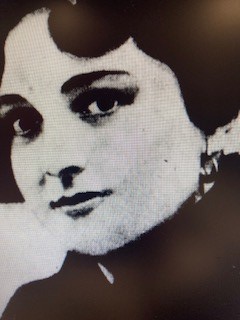
In 1916, Buda Godman gained national attention for her role as the lost damsel in a badger game con that garnered much fanfare after touring New York, Atlantic City and Chicago, when authorities there finally brought its run to a close.  News of a former convent school girl running with a gang of international blackmailers shocked the nation, and many believed Buda was as much a victim of the con as its mark, wealthy widower Edward R. West.  But Buda Godman was nobody’s victim, and West was not the first knight in shining armor she had taken for a ride.

Although Helen “Buda” Godman was born and raised in Chicago, her parents, Otha and Julia, both hailed from Indiana and were married in Lafayette.  Due to family ties, the Godman’s spent a great deal of time visiting relatives in Lafayette, and some newspapers report Buda’s family even resided there for a time.  It was in Lafayette that little Helen Godman had an older cousin or aunt also named Helen Godman, which may partly explain how little Helen came to be referred to as Buda.  

As a pint-sized entertainer, little Buda Godman dazzled the townsfolk of Lafayette, Indiana, dancing her way into their hearts long before embarking on her life of crime.  In September of 1898, Miss Buda Godman performed three numbers at a benefit for St. Ann’s church, 612 Wabash Avenue.  

According to the Lafayette Sunday Times, “The feature of the evening’s entertainment was a cake walk, skirt dance and contortion work by Miss Buda Godman ….  This little miss is the personification of grace, and her three numbers were greatly enjoyed and enthusiastically applauded by the large gathering present.”   

The Journal and Courier declared, “This small graceful child completely captivated the audience with her dances….  She is about 9 years old and is one of the most accomplished little dancers in the country.”

In May of 1899, little Helen Godman again delighted the people of Lafayette, singing and dancing to great acclaim at Grand Army hall.  As the Lafayette Journal gushed, “While several of the numbers were encored, the singing of Master Harry Hannagan and the singing and dancing of Little Miss Helen Godman…received the greatest favor.  Miss Helen was recalled several times and her part in the entertainment was one of the most enjoyable features of the evening.”

But it wasn’t just the local townsfolk who found Buda’s performances captivating.  Even a big city impresario became enchanted by her act.  “Little Buda, a short time ago, attracted the managerial eye of Col. John D. Hopkins of a large circuit of theatres, having houses in Chicago, Cincinnati, St. Louis and other cities.  The colonel offered Mr. and Mrs. Godman a very tempting sum for their daughter’s services, but the parents were opposed to her just now becoming associated with the stage,” the Lafayette Sunday Times wrote.

It seems, even at an early age, Buda Godman had already developed the power to send rich men reaching for their wallets.

It wasn’t just the townsfolk of Lafayette that delighted in little Buda’s talent and charm.  Up the road in her hometown of Chicago, she became something of a backstage celebrity among the many who turned out to catch a glimpse of the beautiful and engaging song and dance sensation.  

In Chicago Confidential, Jack Lait and Lee Mortimer report, “One of the principle theatrical hangouts was the basement table-d’hote under the Brevoort Hotel, adjoining the LaSalle Theater, and it was there the town came to peek at and gasp over Buda Godman, who was called the prettiest girl ever born and raised in the town….  Her beauty was so fearsomely fascinating that before maturity she stopped traffic on the streets.  She was petite, a wee trifle plumpish, with big steel-blue eyes, a tip-tilted nose, an oval face with a dimpled chin, a peewee mouth, and tiny hands and feet.”

Clearly, Buda possessed the power to charm the socks off of just about anyone who beheld her beauty or discerned her many talents.  But, as a race track sheet-writer, Buda’s “father’s calling threw him in with shady people.”  So, while her parents may have wished to shield her from a life of the stage and protect her from the many unpredictable and unsavory characters who inhabited her father’s profession, they likely never considered the threat that loomed almost literally inside the home. 

On July 13, 1903, a young couple was arrested by Milwaukee police at the Cream City Opera Garden, which some news reports described as a beer garden.  A 14-year-old Helen Godman of 1169 Lexington Street, Chicago was found in the company of her 20-year-old cousin Norvin Godman of 1133 Lexington Street, Chicago.  Norvin was a barber by trade and lived with his parents just down the street from his little cousin Buda.  

Accounts of how they came to be at that location together were somewhat unclear.  One said Buda had asked her cousin to take her to Milwaukee, to which he obliged.  Other versions said the pair had eloped.  What is clear is that Buda’s parents did not approve of her associating with the young barber and forbid her to see him.

The proprietor of the Cream City Opera Garden, Frank Nolan, was a friend of Norvin Godman.  It was reported the pair had planned to reside with the man.  Buda’s parents were aware of Norvin’s association with Frank Nolan and likely directed authorities to that location.  While Buda’s parents would later deny the couple planned to elope, and the whole affair was simply a misunderstanding, Buda and Norvin’s comments in the press seemed to contradict that assessment.  

According to the Chicago Examiner, Norvin Godman told detectives, “‘I love Helen,’ he said, ‘and I want to marry her.  I don’t see that this is any of your business.’”  Despite the young man’s protestations, the police made it their business, and Norvin Godman was treated to a few nights in jail. 

Buda told reporters, “Of course, I’m too young to marry, but I guess I would have married my cousin, Norvin Godman, if my father hadn’t prevented me.”  

Attempts by Buda’s parents to portray the incident as an innocent miscommunication were likely an effort to avoid additional scandal.  While it is difficult to judge whether the sordid affair contributed to Buda’s eventual pursuit of a life of crime and deception, her parents may have seen the writing on the wall.  A year later when Buda was fifteen, her parents sent her off to St. Joseph’s Academy, a Catholic girls’ school in Adrian, Michigan.

The devil’s trailer Part 6

Aftermath

A day after his conviction was handed down, as a possible death sentence loomed on the horizon, and with the immensity of his situation weighing on him like a granite headstone, John Fryman shifted into panic mode.  “I can prove beyond a shadow of a doubt that I didn’t do these things,” Fryman told Cincinnati television station WCPO-TV in a telephone interview.  “Her footprints were in the blood, not mine,” said Fryman as he desperately tried to pin the blame on Beverly Cox.  Fryman also hammered at his defense, questioning why neither he nor Cox was called to the witness stand.  Defense attorney Shiavone continued to stand by his client, but didn’t offer much in the way of alleviating Fryman’s mounting anxiety.  ”John is a very scared young man.  The electric chair, which he used to talk about so freely, is becoming a reality.  He’s confused, and I hope we can move on and save his life Tuesday,” Schiavone told reporters.

On the eve of Fryman’s sentencing, the grieving mother of Monica Lemen charged the convicted killer with playing mind games as he tried to shift the blame for Lemen’s murder onto Beverly Cox.  “He plays mind games.  People involved in psychology can get people in their confidence, and do things to people that are naive and not used to being around jailbirds.”  Patricia Lemen explained her daughter began receiving letters from Fryman in 1981 after she accompanied a friend to the Cincinnati Correctional Institution to visit the friend’s uncle.  Mrs. Lemen related how Fryman had threatened her daughter.  “She said Johnny drained the blood from an owl, and said to Monica, ‘I could do this to you…and spread your blood on the wall.’”  Patricia Lemen said she was not aware of the threats, or of Fryman’s involvement in satanism until after her daughter’s death.  The grieving mother was still trying to come to terms with the loss of her daughter.  “I feel like Monica went on a trip and didn’t come back.  But I know it’s permanent.”  Lamenting the life her daughter would never have, Mrs. Lemen described Monica as an “achiever, who wanted to get ahead by going to school for business administration and wanted to be all she could be.”

At John Fryman’s sentencing hearing on Tuesday, September 22, 1987, the only two people who really knew what took place at the mobile home on Sammy Drive in Fairfield, Ohio took the stand to deliver their testimony.  Beverly Cox, whose cooperation with investigators and prosecutors was instrumental in convicting John Fryman of aggravated murder, gave a tearful account of the horrific events of February 9th, 1987, and the personal struggles which led to her participation in those events.  According to Cox, on February 9th John Fryman told Cox he was going to bring Monica Lemen back to their trailer and kill her.  When the pair arrived, Cox hid in a bedroom closet, during which time she heard a gunshot.  Fryman told Cox to come out of the closet.  Monica Lemen lay dead in the “sorcery room” of the couple’s home, and Fryman told Cox, “Baby, you’ve got a dead body in the trailer.”  “He was all happy about it,” Cox testified.  The next day, Cox said, she held Lemen’s ankles while Fryman sawed off the legs to make it easier to remove the body from the trailer.  She also helped clean up the blood.  Cox said she assisted Fryman because she was afraid.  Cox’s testimony mostly mirrored the written confession Fryman gave police with a few extra details thrown in.  

In additional shocking testimony, Cox detailed her fear of Fryman and the dark magic he exploited to exert power over her mind and possibly her soul.  Cox said she learned about satanism from Fryman who variously referred to himself as Todva the Crazy and the prince of evil.  She claimed Fryman had her under his influence, “I didn’t know if I was coming or going.”  According to her testimony, she became free of Fryman’s psychic control in April, two months following the murder.  “I see it all now.  I see what he’s done.  I don’t believe any of that stupid crap anymore,” Cox testified.  However, further testimony and Cox’s jailhouse letters to Fryman revealed the young woman’s struggles with evil forces go back much farther than her acquaintance with Todva the Crazy.  Cox testified that her interest in satanism, demons and black magic extended back to high school when she wrote a report on witchcraft.  She stated that her former husband was a satanist and his mother was a witch.  According to Beverly Cox, the devil had been stalking her family for hundreds of years.  In an April 16 letter to John Fryman, Cox wrote, “He tried to get my father, but could not, so he went after me.  This devil had me.  I was going to kill myself.”  She described to Fryman an exorcism or ritual that took place in the jail to free her of a demonic spirit that had “settled around her,” and seized control of her mind and soul.  “I was pounding the walls with my fists, pounding my head against the walls, pacing the floor.  My body went blue.  I could not stop shaking.  It was horrifying,” Cox wrote.  On the stand, Cox characterized that jail cell experience as a “demon or spirit in the room that was removed out.”  The blueness in her legs she attributed to poor circulation.  Cox said her parents, Victor and Francis Dawson of Cincinnati, came to the jail on April 4th with her confirmation Bible.  “Dad was telling me everything was going to be alright, that Johnny couldn’t do anything to me.  Dad started to read the Bible.  He said everything will be explained, evil and hell are all around us.”  According to Cox’s testimony, a priest, the Rev. Walter Sherman of Trinity Episcopal Church in Lawrenceburg, IN, accompanied Cox’s parents to the jail the day of the exorcism ritual, and jail records corroborated her testimony.  However, Rev. Sherman, who sat in the courtroom with the Dawsons, denied taking part in the ritual to reporters, and claimed not to have met the Dawsons until April 19. 

When it was Fryman’s turn to take the stand, he refused to take an oath, and proceeded to deliver an hour-long monologue in which he characterized Beverly Cox as a sinister femme-fatale that murdered Monica Lemen out of jealousy and skillfully cast the blame on him.  The only time Fryman expressed anything resembling regret was when he described dismembering Lemen’s dead body.  “I knew I couldn’t just carry her body out in broad daylight.  We ended up cutting her legs.  It’s something I can’t explain, it was totally irrational.”  Regarding his written confession, he called it “totally bogus” and said, “I had no reason to kill Monica Lemen.”  

While acknowledging he went by the satanic name Todva, Fryman denied an involvement in satanism, blaming Cox for his trailer’s devil themed decor.  “I catered to this woman’s madness,” Fryman said of Cox.  No word yet on whether HGTV has optioned “Sorcery Room,” a home improvement series in which Beverly Cox shows you how to take that old outdated spare bedroom and turn it into a modern, functional space for practicing occult magic.  Fryman also surprised the court by revealing a wicked swastika tattoo inside his lower lip.  He referred to the symbol as a “wheel of life” and claimed it was a good sign.  And in yet another instance of Fryman’s flair for the dramatic, he related a story Cox had told him about her visit to a psychic that seemed to foreshadow the tragic events.  “She (the psychic) said she and another person would be arm in arm with a mutilated body between them,” Fryman told the court.     

Despite not taking an oath prior to delivering his suspect testimony, and his lack of remorse and failure to take responsibility for the crimes, Fryman was ultimately spared the death penalty and given life in prison.  As for Beverly Cox, she got off with a jailhouse exorcism and time served in protective custody.  Cox also received $25 for every day she was in the Butler County Jail.  Immediately following her testimony, she took her $5300 and embarked for Germany to stay with her sister who was serving in the military there.  At some level, it does seem that Beverly Cox managed to elude justice in this case.  To what extent she was an innocent victim of the evil magician Todva, or a willing participant and advocate for the evil deeds committed by the pair, it will most likely never be known.    

Justice was swift in the severed legs case with slightly more than seven months elapsing between the commission of the crimes and the sentencing of John Fryman.  However, it took quite a bit longer for the justice system to make Little Cedar Grove Baptist Church whole again.  The headstone that John Fryman and Beverly Cox had stolen from the church for use as a satanic altar sat in the basement of the Butler County Courthouse for five years following the trial.  Stained by soot and candle wax, the headstone weighed 450 pounds and took four trusties of the Butler County Jail to move and load onto a truck for transport.  How Fryman and Cox were able to move the hefty slab of granite from the church to his trailer’s sorcery room is unknown.  Barring a levitation spell cast by Todva the Crazy, is it possible the pair had help from others within their magic circle?  

At the time of its theft, the headstone occupied a space leaning against a column inside the church.  The inscription on the stone read, “To the memory of Elizabeth, wife of William Tyner, who departed this life Aug. 2, 1810, age 36 years 3 days.”  The Rev. William Tyner was the church’s first minister.  According to the July 29, 1954 edition of the Brookville Democrat, it was the only headstone uncovered with the discovery of the burial ground and thirty other grave markers on the church site.  The headstone featured “the intricate engraving of willow tree, coffin and lamb as well as the delicate etching around the word ‘Sacred.’”  Apparently it was not so sacred that caretakers refrained from uprooting the ancient headstone and placing it inside the church.  

Whether or not the act of disturbing the burial ground produced a cosmic disturbance that would ultimately result in an unspeakable evil revealing itself at the Cedar Grove site is a matter for speculation.  However, historical events do not appear to rule out the possibility.  Regarding that previously mentioned earthquake that hastened the construction of Little Cedar Grove Baptist Church, E. A. Wood wrote in 1894 that “quite a number of the members of this church who had become careless as to matters spiritual, interpreted this violence as a visitation of the Almighty upon them on account of their sinfulness”.  Additionally, Wood reported that the fledgling congregation struggled mightily to keep Freemasons out of its midst, the baptists in those days being not so liberal “and very antagonistic to secret fraternities.”  Ultimately, however, the church’s leaders relented and restored membership to congregants who had refused to renounce Masonry.  It wasn’t long after this fateful decision that the congregation began to fade out of existence.  According to Wood, “The church continued to prosper until about 1850, when the Reaper began to gather the harvest and the members of the old church were gathered in.”  

If there was a spiritual struggle between those seeking the Lord’s favor and malevolent forces that sought to inflict destruction and despair on the Little Cedar Grove community, John Lee Fryman seemed eerily attuned to that conflict.  Despite possessing an education in the science of human behavior, and for a time showing a desire to use it to help others, Fryman instead chose to push further and explore the murky pathways that lay beyond the boundaries of scientific understanding.  There he saw something, something that led him to make an offering of the severed legs in order to, as he stated, “increase the power of that spot.”  Whether the devil made him do it, or he took it upon himself to curry favor with his dark master matters little.  It is a certainty that John Lee Fryman lost himself in a domain beyond his understanding and ability to control.  He wandered willingly down a dark path, which he could have turned back from at any time, but instead chose to follow the pull of black magic and mystery until he was gathered into its black abyss.

Sources:

The Cincinnati Enquirer

Dayton Daily News

The Indianapolis Star

The Indianapolis News

The Star Press (Muncie, Indiana)

The Brookville Democrat

Franklin County Historical Society

The devil’s trailer Part 5

Trial

In the weeks leading up to his trial, John Fryman did little to help himself, mostly ignoring his lawyer while scheming ways to manipulate the court.  At a competency hearing on September 10, 1987, Fryman revealed to the court a plan to fake insanity.  “I was going to fake insanity,” Fryman told Butler County Common Pleas Court Judge John R. Moser.  “I am well aware of sociology and psychology and know how to do that.  Now I believe the facts will show that I don’t have to do that.  I think I can stand on the facts of the case without having to push things around.”  Undoubtedly thinking they’d dodged a bullet, the prosecution must have been relieved that Fryman had shelved his plan to “push things around” and manipulate the court into accepting his insanity.  

Nevertheless, the competency hearing continued with conflicting testimony coming from a number of experts who examined Fryman.  Psychiatrist Charles A. Feuss interviewed Fryman for an hour at the Butler County Jail and found the young man to be well oriented and able to talk about his case in a “clear and concise fashion.”  According to Feuss’s testimony, Fryman blamed the killing of Monica Lemen and the shooting of Tammy Sue Rose on his accomplice Beverly Cox.  Fryman also told Feuss that his attorney wants him to plead insanity, but that he doesn’t want to and doesn’t think he’s insane.  Dr. Donna Winter of the Butler County Forensic Center spoke to Fryman on three occasions and also found him competent to stand trial.  

However, Dr. Robert H. Fisher, director of the Butler County Forensic Center, disagreed with his colleagues, finding Fryman extremely agitated during interviews, and unable to comprehend his relationship to the charges against him.  Fisher testified that Fryman suspected his attorney, F. Joseph Schiavone, was “part of a system of maneuvers against him designed to make Beverly Cox heroic and innocent while he is thrown to the wolves for crimes he denies committing.”  The alleged conspiracy also included listening devices in his cell, CIA involvement and an impostor posing as his attorney.  Responding to the injustices committed against him, Fryman told Dr. Fisher he (Fryman) would “lead the way to the electric chair.”  

Picking up on Dr. Fisher’s testimony, Fryman’s attorney argued, “The man is totally confused, judge.  When a man’s on trial for his life, he doesn’t spend seven months misleading his defense attorney and saying he will lead the way to the electric chair.  He is not competent.  He needs hospitalization.”  

In the end, Judge Moser was unconvinced by arguments for Fryman’s incompetence.  Ordering the trial to proceed, the Judge stated, “He may be different.  He may be strange.  He may be unusual.  But different, strange and unusual (do not) mean he’s not competent to stand trial.” 

The following day, a suppression of evidence hearing was held to determine if statements made by Fryman to authorities following his arrest would be admissible at trial.  While in Indiana State Police custody in Connersville, Fryman admitted to shooting Monica Lemen but claimed it was an accident.  Fairfield Police Sergeant Eddie Roberts testified Fryman told police that Monica Lemen entered the “sorcery room” located in the rear of his mobile home.  There she began reading an inscription Fryman had written on the closet door.  Fryman said he then picked up a .25 caliber handgun that was laying on the altar, and, as he inserted the clip, the gun discharged.  Cincinnati police specialist Carey Rowland testified that when Fryman was asked about the inscription, Fryman told Rowland “demons did it through him,” and Fryman admitted that he often saw demons.  At a later date, Fryman admitted to Cincinnati homicide detective Robert Hennekes, “I probably made a mistake telling you guys all this.  I should have acted crazy,” Hennekes told the court.  Additionally, Fryman also gave authorities a written statement implicating himself in the Fairfield gas station robbery and the shooting of Tammy Sue Rose.  

As in the competency hearing, Fryman’s attorney F.Joseph Schiavone made little headway with Judge Moser.  A motion to suppress Fryman’s statements to authorities was denied, and a motion for a 30-day continuance also ran into a brick wall.  Pleading for the continuance, Schiavone argued that his client had only begun to cooperate, and that he needed more time to prepare an adequate defense.  “This is a complex case with a lot of witnesses and hundreds of pieces of evidence.  We find ourselves on the eve of trial with only three days for this defendant to bring me up to date,” Schiavone argued.  However, an unyielding Judge Moser was not persuaded, asserting that Fryman’s refusal to cooperate with his lawyer was his choice.  “I don’t think the court can allow a defendant to control the trial docket by changing his strategy,” the judge said.  With that, Judge Moser set jury selection to begin the following Monday morning at 9:00 a.m.

The trial got underway Monday, September 14, with jury selection lasting a mere two hours, leaving enough time on the first day for the 12 jurors to tour the crime scene.  As it turns out, the trailer had three rooms painted all black.  Additionally, the living room was adorned with statues of a witch, a winged black cat and several black candles.  Pictures of unicorns added a lighter touch to the home’s mostly unforgiving dark interiors.  From the ‘sorcery room,’ where the murder was alleged to have taken place, an inverted cross, a silver chalice, a knife and a ram’s head had been confiscated by police along with the headstone ‘altar’ and the closet door that contained the inscription Monica Lemen had allegedly been reciting when she was shot. 

At the close of the first day, defense attorney F. Joseph Schiavone met with reporters outside the courtroom to make a preemptive case to the press on his client’s behalf.  In his remarks, Schiavone described Fryman’s earlier admissions of responsibility in the death of Monica Lemen as an effort to protect his then-girlfriend Beverly Cox.  According to Schiavone, when Fryman was arrested, he admitted to accidentally shooting Lemen to Indiana authorities because he believed Cox was pregnant and he hoped to get a light sentence so he could be quickly reunited with Cox and their baby.  Regarding a later statement to police where Fryman copped to premeditated murder, Schiavone said that Fryman believed Cox was being sexually abused in jail and he made the statement hoping she would be freed.  “He read the law on capital punishment and tailor-made his statement to fit it, all to protect Beverly,” Schiavone said.  With opening statements set for the following day, Schiavone seemed to be making a desperate attempt to gain sympathy for his client, promoting a “protect Beverly” rationale for the confessions while preparing to transition the following day to a “blame Beverly” defense. 

During opening statements on Tuesday, Butler County Prosecutor John Holcomb did not shy away from allegations of satanism and black magic as being factors in the slaying of Monica Lemen, even as detectives had previously tried to downplay the angle.  Addressing the court, Holcomb said John Lee Fryman was motivated by “a mixture of anger, the occult, black magic and satanism…John Fryman arrived at the conclusion in his mind that he would kill Monica Lemen, and lured her to his trailer…John Fryman took Monica Lemen to what he called his sorcery room…and had her read a satanic incantation that was painted on the door.  While she was doing that he shot her in the back of the head with a .25 automatic.”  Holcomb told the court the pair had been pen pals when Fryman was serving time for robbery in the Lebanon Correctional Facility.  On the day of the murder, Fryman lured Lemen to his trailer on the pretense of helping her cash some stolen checks.  Holcomb assured the court that when jurors hear the evidence, they’ll conclude Fryman “deserves only to die” in the electric chair.   

In his opening statement, Fryman attorney F. Joseph Schiavone launched headlong into a “blame Beverly” defense.  According to Schiavone’s version of events, on February 9 John Fryman left Lemen and Cox alone together at his mobile home while he went to Middletown to buy marijuana.  While away, Beverly Cox killed Lemen out of jealousy because both women loved Fryman.  When Fryman returned, he found Monica Lemen dead in his living room.  “Beverly Cox was hysterical.  All she kept saying was it was an accident.  Blood was on the floor,” Schiavone said.  Fryman responded by saying, “Don’t worry.  I’ll take care of everything.”

Interestingly, the prosecution and defense not only differ in regards to who pulled the trigger, but also as to where the actual killing took place.  The prosecution contends the shooting occurred in the “sorcery room,” while the defense seems to assert that Lemen was killed in the living room.  Descriptions of the mobile home indicate that these are two different rooms with the ‘sorcery room’ located in the rear of the trailer.  From newspaper accounts, there is no mention of the location of the killing being a point of contention at trial, and all accounts have investigators pointing to the “sorcery room” as the location of the actual shooting.  If the two rooms are the same room, then the point is irrelevant.  But if the defense is describing a different location for the commission of the murder from the generally accepted one, then it seems like a pretty bone-headed maneuver that could be easily discredited.

Nevertheless, Schiavone pressed ahead with the defense assertion that Beverly Cox was also responsible for the shooting of gas station attendant Tammy Sue Rose.  According to Schiavone, two days following the Lemen shooting, John Fryman was pumping gas at the Clark Service station when Beverly Cox entered the station.  Fryman said he heard two “pops,” and when Cox returned to the car she “had a smile on her face and money from the gas station.”  If we are to believe the defense account, it seems like everytime the hapless John Fryman lets his girlfriend out of his sight for even a few minutes, she goes off and shoots somebody.

While the defense mostly portrayed Fryman as an unwitting accomplice to the remorseless, trigger-happy psychopath, Beverly Cox, it did concede that Fryman sawed off Lemen’s legs the day following the shooting to make it easier to remove the body from the trailer.  Concluding his opening remarks, Schiavone related a touching account of Fryman’s boundless love and devotion to the murderous Cox.  Having received letters from Cox describing ongoing sexual abuse while in jail, Fryman decided to take the fall to protect the woman he loved.  “He said bring me a Quarter Pounder and a Coke and I’ll make a statement.  The Quarter Pounder was given to the woman he loved, it wasn’t for him.  And so was the confession,” Schiavone told the court.  One can only imagine the tears that were shed in the courtroom that day upon hearing this heartwarming tale.

Among the witnesses called that day was Lemen’s live-in boyfriend Dennis Whitt who testified that he last saw Lemen on February 9.  Whitt said Lemen received a phone call from Fryman who arranged to pick her up.  Whitt testified Lemen had become fearful of Fryman following a confrontation in December at Fryman’s trailer.  “She said he threatened to kill her and write her name in blood on the wall,” Whitt said.  Witnesses also testified that Fryman had helped Beverly Cox acquire a gun for $45 because she was fearful of her ex-husband.  It was the same gun found in Cox’s purse when the pair were arrested.

When day three of the trial got underway, the jury was presented with a courtroom reconstruction of the satanic altar discovered in the trailer of John Fryman.  Fairfield Police Officer Ed Roberts testified that the items were confiscated following a search of Fryman’s trailer.  The altar consisted of a tombstone that sat atop a wooden frame, topped by two black candles, a bell, a chalice, a book of black magic, a butcher knife and ram’s skull.  It was revealed the previous day that the tombstone came from the same Indiana churchyard where Monica Lemen’s severed legs were discovered.  The saw that was used to sever Lemen’s legs was placed underneath the altar.  Additionally, the sorcery room’s closet door from which Monica Lemen allegedly “read a satanic incantation” as John Fryman shot her was displayed for the court.  On the door in Runes language was written an “Invocation to Satan” which when translated read:  “In the name of Satan, the Ruler of the earth, the King of the world, I command the forces of Darkness.…Come forth and answer to your names by manifesting my desires!”  

A number of details emerged regarding the numerous confessions John Fryman made to authorities in the months following his arrest.  In a written statement to police, Fryman admitted killing Lemen because she insulted him by bringing another magician to his trailer to kill him.  Fryman further confessed that for two weeks he told Beverly Cox he intended to kill Lemen, adding that Cox hid in a closet when Lemen came to the trailer.  Fryman wrote that it was his idea to cut off Lemen’s legs and that Cox helped him.  “Bev cut the jeans away.  I cut her flesh with the butcher knife on the altar, and her bone with the wood saw under the altar.”  In his statement, Fryman also revealed that he placed Monica Lemen’s deceased body in a dumpster, and that he chose the Indiana churchyard to leave the legs because it was a place where he practiced “magic.”  “I drove to Indiana.  I went to the church, as it was a place I practiced magic.  By throwing the legs there, I increased the power of that spot,” Fryman stated.  Fryman’s written statement also included an admission that he shot Fairfield gas station attendant Tammy Sue Rose in the face and stole $175 from the cash register while Beverly Cox waited in their car.  

It was a damning statement, which may as well have been written in cold blood.  Defense attorney Schiavone’s attempts to deflect blame onto Beverly Cox were of little merit against his client’s own words.  As Prosecutor Holcomb told reporters after the court had recessed for the day, “(Fryman) confessed five or six different ways.  What more do we need?  I think all the elements are there.”  Fryman’s own statements were so damning that Holcomb felt no need to call Beverly Cox to the stand unless needed to rebut Fryman’s testimony.  But that wouldn’t happen, because the following day the defense rested without calling Fryman or any other witnesses.  “He has no obligation to take the stand and be abused by the prosecutor.  They haven’t proved anything against him,” Schiavone told reporters.  Despite defense efforts to argue that Fryman’s statement came about as a result of pressure applied by Cox through a series of letters written to Fryman in the months since their arrest, Fryman did concede that the part about cutting off Lemen’s legs was true and pleaded guilty to gross abuse of a corpse. 

Closing statements got underway on Friday, September 18, 1987.  Prosecutor Holcomb continued to hammer on Fryman’s multiple confessions as proof he committed the crimes and the budding sorcerer’s involvement with black magic as the motive.  “In his own words he said it’s a perfect statement to put him in the electric chair – and it is….Being an admitted so-called magician, he would have had to do the killing to increase his powers.  You see, it makes sense that he did it; it doesn’t make any sense that Cox did it.”  Holcomb also cast doubt on the defense claim that Fryman took the blame out of love for Beverly Cox.  “Why does he want to take the blame for her if she has immunity?  He should be putting the blame on her because she’s going to go free anyway.”  Finally, in an act of biblical drama worthy of the great Charlton Heston, Holcomb held up the Holy Bible and delivered his closing remarks:  “He went against that ancient law, ‘Thou shall have no other gods before me.’  Moderation in dealing with wickedness only adds foolishness to the crime.  Find him guilty as charged.”

It was pretty much curtains for the defense after that bit of theater.  According to Schiavone’s closing statements, the motive boiled down to two jealous females battling for the affections of a promising young magician who owned a pretty wicked trailer.  “The devil didn’t make this man do this.  What made this happen was Beverly Cox’s jealousy of Monica.  It was a female rivalry….  Beverly Cox sits 200 yards away from this witness stand laughing because she pulled it off–she pulled off her little trick….  (She) has made a fool of the state of Ohio.  Don’t let her make a fool of this jury.”

The jury deliberated 6½ hours before returning a verdict of guilty of aggravated murder while committing felony kidnapping.  That specification made Fryman eligible for the death penalty.  Additionally, Fryman was convicted for attempted murder and aggravated robbery, stemming from the gas station holdup and shooting of Tammy Sue Rose.  A sentencing hearing was set for the following Tuesday with Judge Moser presiding.  In remarks to reporters, defense attorney Schiavone did not take issue with the outcome.  “Naturally, we’re very disappointed.  It was an uphill battle.  Unfortunately, John insisted on confessing at almost every juncture in this case.”  For his part, prosecutor Holcomb voiced what many must have been thinking.  “I think the guy earned it, he deserved it and he got it.  This is a bizarre business.  The evidence shows this man worked at being evil.”  

That John Fryman worked at being evil, there could be little doubt.  The practitioner of black magic who maintained a sorcery room in his home was clearly trying to increase his stature in the world of the dark arts.  But there was also the earnest college student who was only a few credits short of completing his degree, and the attentive care home worker who received positive reviews from supervisors.  Could he have pursued a different path?  One former acquaintance of Fryman’s described him as someone who didn’t stand out in any way.  And maybe that was the problem.  Perhaps his embrace of black magic stemmed from a desire to be noticed, to be taken seriously, to increase his power and stature, and to be feared.  Playing it straight relegated him to a life of obscurity, but immersing himself in the world of dark spirits garnered him prestige and a small following, conferring on him the designation of Todva the Magician.

Sources:

The Cincinnati Enquirer

Dayton Daily News

The Indianapolis Star

The Indianapolis News

The Star Press (Muncie, Indiana)

The Brookville Democrat

Franklin County Historical Society

The devil’s trailer Part 4

Arrest 

Even after the brutal slaying and dismemberment of Monica Lemen, it seemed John Fryman had not had enough of doing the devil’s business.  On February 11, 1987, only a few days after killing Lemen, Fryman and his accomplice, Beverly Cox, shot a gas station attendant during a stick-up of the Clark Oil Co., 3660 Dixie Highway, Fairfield.  Although the victim, Tammy Sue Rose of Fairfield, would survive the shooting, she would have no recollection of the attack and require months of physical therapy to recover.  John Fryman was on quite a roll.  The young man who had studied sociology and psychology while in prison, and was only three credits short of graduating college, had fully committed himself to a path of blood and mayhem.  “He was a person that does not stand out in any way.  A very quiet person,” said a spokesperson for the college he attended.  It now seemed the unassuming young man was making an effort to stand out.  The big question is why now and why choose such a grisly course of action? 

It would be some time before investigators would connect the gas station robbery with the severed legs discovery.  In the meantime, detectives learned that Fryman was issuing threats through intermediaries to his former associates.  According to Middletown Police Chief Russell Dwyer, John Fryman, Monica Lemen and two unidentified men had paid a visit to a Middletown, Ohio couple the previous month.  While the nature of that visit was not revealed, the couple did say that, after the discovery of the severed legs, they were threatened by one of the two unidentified men.  “The couple said the man told them he had been in contact with John Fryman and he indicated they should be afraid of him.  The man told them in the same conversation that Fryman had talked of the occult and black magic,” said Chief Dwyer.  

It isn’t difficult to imagine that an interest in the occult and demonology could have been what bound this group together.  Family members and friends of both Fryman and Lemen agreed that the two shared an interest in the occult.  That knowledge coupled with the revelation that Fryman circulated black magic threats to group members, could lead one to conclude that this was a group dabbling in dark occult practices. Did Fryman enjoy some kind of power or status within the group?  Did the quiet young man who went almost entirely unnoticed in the everyday world feel emboldened by the dark forces inhabiting his spiritual one? 

On Thursday, February 19, John Lee Fryman and Beverly V. Cox were arrested at around 4 p.m. along U.S. 40 outside of Richmond, Indiana.  Fryman was wanted for questioning in the disappearance of Monica Lemen, and Cox was carrying a .22 revolver in her purse for which she had no license.  The gun would later be identified as a match to the weapon used to shoot Tammy Sue Rose.  The pair were picked up by an Indiana Conservation Officer and a Wayne County (Indiana) Sheriff’s Deputy, who had been told to be on the lookout for Fryman’s 1980 Ford Pinto station wagon.  

Fryman and Cox were taken into custody and questioned by authorities in Indiana.  The morning after their arrest, Indiana State Police Detective Reginald Brewer testified in Wayne County Superior Court that the pair had admitted killing Monica Lemen during interviews with state police Thursday evening.  A source familiar with the hearing, none other than presiding Judge Harry H. Holtsclaw, told The Indianapolis Star, “They (Indiana State Police detectives) intimated they had confessions, and the car was used for transportation of the body parts.”  The judge granted the ISP request to search the Pinto, and Fryman was held on a charge of aggravated murder while Cox was charged with complicity to aggravated murder.  According to “an informed source,” Monica Lemen “was shot in the head at the mobile home in Fairfield.”  No word on whether the informed source was the honorable Judge Holtsclaw.  With that, the devil worshiping duo promptly waived extradition from Indiana and were transferred to the Butler County Jail in Hamilton, Ohio.  

Naturally, of pressing concern to investigators in Ohio was the location of the rest of the remains of Monica Lemen.  Based on information provided by the suspects, authorities undertook a massive search of a Colerain Township, Ohio landfill.  According to Fairfield Police Chief John Rednour, the legs were severed “as a matter of logistics.”  The corpse was too large to fit in John Fryman’s Ford Pinto station wagon, so the legs were removed and the torso deposited in a dumpster owned by Rumpke Waste Inc.  The dumpster had since been emptied, but authorities were able to determine that the refuse had been deposited in the landfill near Cincinnati.  With the aid of landfill employees, police were able to locate the area of the landfill where the dumpster’s contents had been deposited.  For days, police and refuse workers sifted through trash in search of the body.  Backhoes scooped up yards of waste to be spread out and examined.  Searchers periodically checked the dates on discarded newspapers to make sure they were searching through refuse that corresponded to the date the dumpster was emptied.  After three days of searching “daylight to dusk,” frustrated investigators halted their efforts.  “It was just too massive,” said Fairfield City Manager Robert Gerhardt, who added that all involved felt bad that they couldn’t locate Lemen’s remains for the sake of the family.

On Tuesday, February 24, Fryman and Cox were arraigned in Fairfield Municipal Court with Judge James E. Walsh presiding.  Fryman was charged with aggravated murder and Cox with complicity to aggravated murder.  In a document filed with the court, police said Fryman admitted killing Monica Lemen and Cox admitted helping him.  The judge ordered a preliminary hearing for the following Friday to determine whether the case would be bound over to a Butler County grand jury.  Investigators confirmed their belief that Monica Lemen died of a gunshot wound to the head, reiterating their contention that she was not killed as part of a satanic ritual.  

On Friday, February 27, Beverly Cox testified for three hours in front of a special session of the Butler County grand jury.  In exchange for that testimony, and contingent upon her testifying at Fryman’s trial, Cox was granted “transactional immunity,” according to her attorney Ronald Craft.  “What that means is that she will not be prosecuted on the offense of complicity to aggravated murder,” Craft said.  The following Monday an indictment was filed in the Butler County Common Pleas Court charging John Fryman with aggravated murder and gross abuse of a corpse.  The murder charge included specifications of kidnapping and use of a firearm, opening the door for a potential death penalty sentence should he face conviction.  The indictment charged that Fryman “with prior calculation and design” killed Lemen and “did treat the human corpse of Monica Lemen in a way that would outrage reasonable community sensibilities.”  

Prosecutor John Holcomb seemed satisfied with Beverly Cox’s cooperation, and in remarks to reporters stated she had no involvement in the actual murder.  “Her testimony against the defendant was vital.  Our study of the evidence showed that Beverly Cox was present when the events occurred, but wasn’t a party to it in that she was hiding in the closet.”  Nevertheless, Cox remained held in the Butler County jail in lieu of a $100,000 bond to ensure her testimony in the upcoming trial.  “What she was probably more guilty of than anything would be an obstruction of justice type charge,” Holcomb continued.  “We thought it was in the interest of justice to have her tell her story of what really happened.  It will all come out at the trial.”  Fishing for shocking details, reporters asked if allegations of devil worship had been discussed during Cox’s testimony.  Holding his satan cards close to his chest, the sly prosecutor simply smiled and said, “Does a bear live in the woods?”

Perhaps sensing he was being sold down the river Styx, a desperate John Fryman attempted to clear the air regarding the allegations that were piling up against him.  In a telephone interview with the Cincinnati Post, Fryman claimed Indiana police had coerced a confession out of him.  Describing the interrogation following his capture, Fryman said he “refused to talk to them until they jumped in my face and decided they wanted to bruise me up slightly.  Then I just kind of nodded my head to everything they said.”  Fryman also maintained that “extenuating circumstances” led to the death of Monica Lemen, and that the full story was not being told.  “There’s a lot of things that haven’t been said.  There’s a lot of things involved that nobody seems to be following up on.”  What those “things” were, Fryman didn’t elaborate.  However, Fryman did address the allegations of satanism.  “All the satanism thing they blew all up, all the evidence they supposedly have – they don’t have anything.”  

While maintaining that charges of satanism had been blown out of proportion, Fryman freely admitted to more than just a passing interest in the occult.  “I am involved with the occult.  I think everybody knows that.  You don’t have a room like that in your trailer if you’re not.  But I wasn’t involved in it to the extent they’re saying.”  Fryman also implicated Monica Lemen as a fellow occult practitioner, saying she had recently brought over friends interested in deviant forms of the occult and satanism.  Regardless of the extent of his occult dabblings, Fryman’s protestations accomplished little in shifting the blame away from himself.  Commenting on Fryman’s charges of police coercion and abuse, Fairfield Police Chief Gary Rednour referred to the allegations as a “bunch of baloney.”  

Sources:

The Cincinnati Enquirer

Dayton Daily News

The Indianapolis Star

The Indianapolis News

The Star Press (Muncie, Indiana)

The Brookville Democrat

Franklin County Historical Society

The devil’s trailer Part 3

Sorcery room

Interviews with Monica Lemen’s family and friends led investigators to a mobile home in Fairfield, Ohio.  Based on these interviews, detectives put a search warrant together and served the warrant on Wednesday, February 18 at a residence located in the Debbie Mobile Home Park, 124 Sammy Drive.  The trailer belonged to John Fryman, 24, who, according to Lemen’s friends, had been seen in the company of the young woman.  It was reported by those who knew the pair that the two shared an interest in the occult.  Police serving the warrant were taken aback at the scene they discovered.  “In one of the bedrooms, the walls, the ceilings, the floor, everything is painted black,” Fairfield Police Detective Eddie Roberts told reporters.  “He’s got a table made like a podium and on top of the podium is a granite headstone.  There are all kinds of black candles.  There’s a name on the headstone and it’s a legitimate headstone.”  Roberts also noted that satanic literature was found in the trailer.  Investigators discovered red stains that had been smeared on the floor of the room, a room they described as a satanic worship area.  Detectives speculated the stains could be blood and that an effort had been made to clean up the area.  Hoping to determine whether a crime had been committed at the location, evidence gathered at the scene was sent to the Hamilton County Forensics Lab for testing.  Other items seized during the search included a ceramic goat’s head, nine figurines, a book of magic and an animal’s jawbone.  Police searched for a circular power saw but were unable to find one.  They did, however, retrieve a butcher knife, a handsaw and a hacksaw.  

Investigators were adamant in their belief that Monica Lemen was not killed as part of a satanic ritual.  But there can be no doubt that occult involvement on the part of both Lemen and Fryman is what led friends and family members to suspect Fryman, and formed much of the basis for the search of his trailer.  According to the search warrant application, a friend of Lemen’s said Lemen told her Fryman had threatened to kill Lemen the previous November after a satanic rite performed in his mobile home.  The application states Lemen told the friend she “witnessed (Fryman) kill an owl during a satanic ritual in which he drained the blood on a sacrificial altar.  When Monica protested, he stated he could kill her, dismember her and paint the walls with her blood if she ever made him mad.  Monica told (the friend) that if anything ever happened to her John Fryman would be responsible.”  The search warrant application also stated that Fryman’s parents told police their son was a devil worshiper.

Despite this information, investigators continued to deny a link between Fryman’s apparent occult interests and the death of Monica Lemen.  “We’re not going to guess on motives.  There’s no evidence that any satanic ritual was involved in this homicide,” said Lt. William Fletcher, chief of the Cincinnati police homicide squad.  However, behind the denials to the press, investigators were taking seriously the apparent connections to the occult.  Officials in Indiana, where the severed legs were discovered, had been investigating occult activity in the area for the previous two years.  Reports of mutilated animals in fields, dead animals hung upside down in trees and pentagrams painted on road signs had been given by local conservation officers among others, according to Fayette County Sheriff George Zimmerman.  However, investigation into the incidents failed to make any connection to satanists.  “We’ve been doing some checking, but we haven’t been able to put our finger on anything,” said Zimmerman.  “We can’t find out where they’re having meetings.”  Additionally, investigators interviewed a parapsychologist and demonology researcher to see if any connections could be drawn between the severed legs and the items discovered in Fryman’s trailer.  Parapsychologist and witchcraft researcher Tim Patrie was skeptical that the trailer was home to “a dedicated satanist,” but rather the occupant probably had an interest in demonology.  “A lot of people claim to be devil worshippers, but they don’t know what they’re doing.  You’re not going to find a true satanic church in a trailer court,” said Patrie.  Patrie did say, however, that he believed a true coven of 13 satanists was operating in the area where the legs were discovered, adding that the satanists tend to practice their rituals in remote areas away from their homes and mark their territory with satanic symbols on road signs.            

Even as Fryman eluded authorities, a clearer picture was beginning to develop concerning the strange occupant of 124 Sammy Drive.  Neighbors at the Debbie Mobile Home Park described Fryman and his live-in girlfriend, Beverly Cox, as friendly and approachable, but hadn’t seen the pair for a week and had never noticed anything unusual at the location.  According to police, Fryman’s parents were divorced and the young man “floated around Cincinnati,” staying with one or the other parent.  “We think he attended Mount Healthy High School, but quit,” said Detective Roberts.  Reporters learned that Fryman had worked as an orderly at Cottingham Retirement Community in Sharonville, but walked off the job the previous November.  “He was always very attentive to residents’ needs,” said the executive director.  But Fryman also had a troubled past.  Until May 1986, he had resided at the Lebanon Correctional Facility where he served a five to fifteen year sentence for three counts of robbery.  He was paroled after just three years.  Lebanon visitation records show that Fryman was mostly visited by family members.  However, one other individual signed in five times to chat with the budding occultist.  That person was Monica Lemen.

Sources:

The Cincinnati Enquirer

Dayton Daily News

The Indianapolis Star

The Indianapolis News

The Star Press (Muncie, Indiana)

The Brookville Democrat

Franklin County Historical Society

The devil’s trailer Part 2

Severed Legs

There could be no doubt that a sinister force had announced its presence that Valentine’s Day afternoon 1987.  The fact that it chose Little Cedar Grove Baptist Church to reveal itself was an indication it intended to mock a gathering place of life, joy and family with its offensive brand of gruesome handiwork.  The additional fact that it seemed to taunt the community by offering only the dismembered legs of the victim, making identification nearly impossible, was proof this evil desired to inflict maximum horror and anguish on the community for as long as possible.  State and local law enforcement wasted no time gathering available facts and casting a wide net in hopes of quickly capturing the elusive evil. 

Aside from the presence of the severed legs, the rest of the scene appeared mostly undisturbed.  The legs lay about thirty feet apart in a wooded area near an embankment off of U.S. 52, about two miles southeast of Brookville, Indiana.  Investigators revealed the legs were those of a white female and were severed about eight inches above the knee.  They were clad in blue jean pant legs, with the feet and lower part of the leg in red and white striped socks inside tan, suede cowboy boots size 8 ½.  “It is a pretty awful crime,” said Indiana State Police Cpl. Charlton R. Beard, “and right now, we don’t have lead one about it.”   

From the appearance of the scene and the lack of blood traces, investigators concluded the legs weren’t severed at the site but were transported there.  “It looks like someone just pulled off the road and threw them off an embankment.”  said Indiana State Police Detective Sgt. Philip E. Wietholter.  Authorities combed the area around Brookville, trying to uncover additional evidence or leads that might help them identify the victim.  Officers checked abandoned buildings and area motels.  They followed potential leads from local residents reporting suspicious looking cars in the area.  More than a dozen police officers fanned out across the countryside trying to track down clues, but an intensive search of the area along U.S. 52 between New Trenton and Brookville revealed no additional evidence.  

Plans were made to transfer the severed limbs from the state police post in Connersville, Indiana to the Indiana University Medical Center in Indianapolis for a pathology examination.  Without the rest of the body, identifying the victim was going to be a hard task.  “Unless someone identifies the shoes or socks, it’s going to be a difficult situation,” Weitholter said.  Hoping the examination could determine where the victim’s boots were purchased, Detective Weitholter thought the information might lead to an id of the victim.  However, another sad but promising development had already begun to take shape.  The desperate parents of missing loved ones had been contacting local law enforcement agencies with information.  Some parents had even reported that their missing daughters may have been wearing a similar color and style of boots at the time of their disappearance.

While the medical examination did provide additional details regarding the victim, it failed to uncover information that would readily point to an identification.  According to Sgt. Reginald Brewer of the ISP, the examination revealed that the white female was between 20 and 30 years old.  She was approximately 5 foot 5 inches and weighed around 170 pounds, give or take 20 pounds.  Brewer said pathologists could not determine the color of the woman’s hair, or how long the woman had been dead.  However, investigators believed the legs had been present at the site for less than 48 hours.  Authorities surmised a very sharp object, such as a knife or a saw, had been used in the dismemberment, because it produced a clean cut.  Sounding a bit pessimistic, Det. Weitholter added, “There was no evidence of scars or deformities that would have made it easier to identify.”  

The search for the body of the young woman continued on Tuesday, February 17.  An air search had been planned for that day but had to be called off due to snowfall in the area.  It was around this time, however, that investigators caught a break.  The family members of a missing Cincinnati woman were able to identify the severed legs as belonging to Monica Denise Lemen, 21, who had been missing since February 9.  Family members recognized the socks and were able to identify distinct markings on the boots.  “They recognized the stains on her boots, the size is right, and they even told us where the boots were bought.  We checked the store, and the boots had their code on them,” said Detective Weitholter.  Lemen’s father had reported the young woman missing on February 10, after she failed to show up for work the previous day and had not returned home that night.  The worried parents called around to friends during the night, but no one knew of her whereabouts.  

Monica Lemen had been employed as a waitress at Busken Bakery in downtown Cincinnati, and had shared an apartment on First Ave. with her boyfriend, Dennis Whitt, who aided in the identification of the severed legs.  She had been a student at Cincinnati Technical College where she took management courses.  Co-workers at the bakery described her as quiet and dependable, and someone who aspired to make something more of herself.  A search of Dennis and Monica’s Price Hill apartment was conducted, but investigators discovered no evidence of foul play.  Dennis Whitt was never considered a suspect in Monica’s disappearance and apparent homicide.  However, investigators did focus on one person of interest in fairly short order.  According to Monica’s mother and friends, the young woman entertained an interest in the occult, and this interest had brought Monica into the orbit of a very dark character. 

Sources:

The Cincinnati Enquirer

Dayton Daily News

The Indianapolis Star

The Indianapolis News

The Star Press (Muncie, Indiana)

The Brookville Democrat

Franklin County Historical Society

The devil’s trailer Part 1

A gruesome discovery

The Little Cedar Grove Baptist Church congregation was formed in 1806, not long after the Treaty of Greenville opened an area in the southeast of what would become the State of Indiana for settlement by European pioneers.  Lacking a permanent place of worship, the early residents of Franklin County would often meet in each other’s log cabins for services.  For five years the church community carried on like this, delaying the building of a permanent home for their church.  That is until 1811 when a not-so-subtle message was received by Little Cedar Grove’s dawdling congregants in the form of an earthquake that rocked the midwest.  According to a witness, the Rev. Allen Wiley, “The people ran to and fro, called for prayer meeting, exhorted each other to good deeds and repented of their sins as if Judgement Day was at hand.  Then they met in solemn conclave with the Almighty that if He would send no more earthquakes, they would build Him a church.”  So in short order they purchased land in Brookville Township, hired a carpenter and a mason, and set about building a sturdy little church made of brick, which has warded off comparable earthquakes ever since.  

The Little Cedar Grove Baptist Church held its inaugural meeting August 1, 1812.  The interior of the building contained a balcony accessible by two staircases.  A raised pulpit stood near the rear wall with a pastor’s bench behind it.  Wood pews faced the pulpit, and a charcoal pit in front of the pulpit was added in 1818 to heat the building.  It is not known if the congregants denied themselves heat for the first six years of the church’s existence as punishment for their procrastination, or if the church’s treasury simply lacked the funds for costly capital improvements like charcoal pits.  Additionally, at the northwest end of the property, a cemetery contained the graves of the original members of the congregation.  There a tombstone marked the final resting place of Elizabeth Tyner, who as the wife of the church’s first pastor, William Tyner, departed this life in 1810.  

On February 14, 1987, the Little Cedar Grove Baptist Church was the site of a wedding.  Acquired by the Brookville Historical Society in 1910, and having undergone a number of repairs and renovations over the years, by 1987 the church had not been home to a permanent congregation for nearly a century, but instead had been used for special events.  On this Valentine’s Day Saturday, while the wedding party gathered inside the church, the children, presumably bored with the formality, wandered off to explore the grounds of the church and wooded area nearby.  Around 1:00 pm, while playing in the woods behind the church, the children made a gruesome discovery.  Among the snowy leaves and debris lay a pair of severed human legs.  Panicked, frightened and running to and fro, the frantic children hurried to alert the adults who followed them to the scene.  

In 1987, a destructive earthquake, while potentially devastating, would be an event wholly comprehensible to Cedar Grove residents.  Few would attribute such an event to their God expressing His anger over their lack of devotion.  Most would be able to maintain their composure and ride out the event.  However, very little offered by the modern era could prepare them for the evil that had been dropped into their midst.  No amount of reason or scientific clarity derived in the intervening 150 years since pioneers first settled the area could explain the savagery that lay in the woods behind the Little Cedar Grove Baptist Church.  The shocking sight of the severed legs overwhelmed the mind with dread and sorrow, as if Judgement Day was at hand.

Sources:

The Cincinnati Enquirer

Dayton Daily News

The Indianapolis Star

The Indianapolis News

The Star Press (Muncie, Indiana)

The Brookville Democrat

Franklin County Historical Society

Does Delphi probable cause rule out conspiracy?

According to information contained in the probable cause affidavit released Tuesday, it seems likely accused Delphi killer Richard M. Allen intended to commit murder when he went to the Monon High Bridge on February 13, 2017.  If he parked his car at a place and in a manner that would make it difficult to conclusively identify, if he carried a gun and dressed in a manner that disguised his appearance, as seems to be the case, then he almost certainly went to the bridge intending to kill.  He wasn’t just standing on the bridge staring at the fish when the urge to murder came over him.  Moreover, if the probable cause affidavit is accurate, then he displayed little interest in other females who were on the trails that day.  Of course, it could just be that his plan was to wait and see if any females crossed the bridge.  Maybe that was the necessary precondition to set his plan into motion.  Additionally, it seems likely that he intended to carry out the assault in the area of the bridge.  Why wait until his victims crossed the bridge to try to force them at gunpoint through the woods, across the creek, out to the road and back to his car?  If Richard M. Allen is the killer, which a fair amount of compelling evidence would seem to suggest, then he knew he was going to kill before he went there, and he may have even known who his victims would be.

If the evidence contained in the probable cause affidavit is correct, then Richard M. Allen spent a great deal of time at the scene of the crime.  By his own admission, he did not leave the bridge area until 3:30 p.m.  Also, a witness saw a man walking along County Road 300 North “at approximately 3:57 p.m.” wearing “muddy and bloody” clothes matching the description of the clothes Richard M. Allen admits to wearing.  This means he probably spent a better part of an hour at the crime scene.  If true, this detail would be consistent with statements made by former Carroll County Prosecutor Robert Ives who described the crime scene as “odd” and noted the presence of at least three “signatures.”  “It was not your normal ‘a person was killed here’ crime scene, that’s probably all I can say about it,” Ives said.  These details would appear to indicate that Allen was engaging in behavior that went beyond the act of murder.  Indeed, the Ron Logan search warrant makes reference to staging the scene.  According to WISH-TV, “The document says authorities also found that two articles of clothing from one of the girls ‘…was missing from the crime scene while the rest of their clothing was recovered. It also appeared the girls’ bodies were moved and staged….Based upon my training and experience it is common for perpetrators of this type of crime to take a ‘souvenir’ or, in some fashion, memorialize the crime scene.’”

Clearly, the perpetrator of this crime had a plan, something he had fantasized about for some time.  Richard M. Allen’s purported behavior at the bridge that day appears consistent with someone who had bloody intentions and could very likely have had a clear target in mind.  But why that time, that place and those two innocent children of Delphi.  Could an overweight, balding, boastful, depraved exploiter of young girls have tipped off Richard Allen, or an anonymous profile that turned out to be Allen?  As Alice of The Prosecutors podcast recently theorized, “Kegan could have just been bragging because he’s stupid…It could potentially be, taking it out of the coincidence world, out of the crazy conspiracy world, where they’re all working together behind the scenes, Kegan could have just been stupid and posted a snapshot of his conversation and been like, ‘I got two girls coming to meet me.’  He was never going to go because he is a sad guy who never carries out what he’s going to do.  But someone saw that and was like, ‘That’s an opportunity.  I’m gonna do this.’” 

While it’s definitely within the realm of possibility that Kline’s messaging with Libby, the Marathon Gas Station search, the waiting in a red vehicle admission and the Wabash River search were all just coincidences and lies, Alice’s theory seems entirely reasonable as a possible explanation of these connections.  However, I wouldn’t be too quick to rule out the possibility of “they’re all working together behind the scenes.”  While there may not have been a highly coordinated diabolical plan in operation here, as I’ve written about in previous blog posts, some level of communication or possible coordination is not without precedent in this part of Indiana. 

A June 17, 2022 press release from the Department of Justice, U.S. Attorney’s Office for the Southern District of Indiana titled Two Predators Sentenced to Federal Prison for Sexually Exploiting Four Children They met on Social Media Platforms reads:

“INDIANAPOLIS – Thomas James Israel, 46, of Ft. Wayne, and Max Schafer, 31, of Brownsburg, were each sentenced to federal prison for their role in exploiting four children between October 2019 and August 2020. One of the victims was exploited by both Israel and Schafer during separate incidents.   Israel previously pleaded guilty to sexual exploitation of a child and distribution of child sexual abuse material. On November 15, 2021, Chief Judge Tanya Walton Pratt sentenced Israel to twenty-five years in federal prison. Late yesterday, Schafer pleaded guilty to receipt of visual depictions of minors engaging in sexually explicit conduct and possession of child sexual abuse material. District Judge James R. Sweeney II sentenced Schafer to over fourteen years (175 months) in federal prison.

“According to court documents, between April 2020 and June 2020, Israel met his first minor victim, who was 14, using online applications such as Omegle and Meetme. Using Snapchat and Kik, Israel persuaded this victim to meet with him in person, then forced the victim into sadomasochistic sexual abuse, including forceful oral sex and assault. Israel recorded the sexual abuse on his mobile phone and later sent the video to the victim.

“Israel met a second minor victim using Snapchat and persuaded the victim to send him explicit videos and photos of herself. When this victim was between 14 and 16 years old, she sent her minor boyfriend sexually explicit images and videos of herself. Without her consent, the boyfriend disseminated the images and videos over the internet. Israel downloaded those images and videos onto his online storage account and viewed them for a sexual purpose. 

“Israel met his third minor victim, who was between 14 and 16 years’ old, over Omegle. Knowing that the victim suffered from mental health issues, Israel induced her to produce child sex abuse material, and to sell the images and videos to others online. Israel took a percentage of the fees and paid the victim by sending her gift cards from Victoria’s Secret.

“According to court documents, Schafer also met Israel’s first minor victim using Omegle. Knowing that the minor victim was only fourteen years old, Schafer met and engaged in sexually explicit conduct with the victim. Schafer also persuaded the victim to send him the video that Israel produced, depicting Israel’s violent sexual abuse of the child.”

As this case and many others show, these predators are highly networked.  While it may be rare for one to commit murder, it is not at all rare for them to coordinate and share victims, whether it be for the purposes of sharing images or in person sexual assault.  As one former investigator put it, when it comes to this type of criminal behavior, “There are no coincidences.”

Two currents in Delphi investigation yet to merge

Two Indiana waterways, Deer Creek and the Wabash River, merge at a location southwest of downtown Delphi.  Each identifies a separate current of information known to the public about the police investigation into the murders of Abigail Williams and Liberty German of Delphi.  The Wabash flows through Peru within blocks of the home where Kegan Kline lived at the time of the murders.  Deer Creek is part of the crime scene, of course, and flows beneath the Monon High Bridge where, authorities contend, Richard Allen pursued and confronted the girls back in February of 2017.  Deer Creek empties into the Wabash River at Delphi, but will the two currents of the investigation ever merge?

According to WISH-TV, Richard Allen “told a state conservation officer he was in the area on the day of the killings, but his report may have been considered unfounded, a police source tells I-Team 8.

“Allen, a 50-year-old resident of Delphi, went to the conservation officer right after the teens’ murders on Feb. 13, 2017, and said he was on the Monon High Bridge that afternoon but didn’t see the two girls, the source says.

“Williams and German were dropped off near the bridge on the day of the murders. Their bodies were found the next day.

“Allen’s statement was forgotten until recently when Indiana State Police became frustrated with the status of the Delphi investigation and asked a group of investigators to look over files related to the case.

“Investigators believe Allen is the man on the bridge in the cellphone video and in sketches released by police, the source tells I-Team 8.”

This new revelation would seem to indicate that investigators stumbled upon the Richard Allen lead independent of any information they received from Kegan Kline.  Taken on its own without additional context, the information appears to indicate that Richard Allen acted alone.

However, the WISH-TV reporting goes on to verify another bit of speculative info related to the Wabash River branch of the investigation.

“The police source also confirms that the recent five-week state police search of the Wabash River in Peru was connected to the Delphi investigation.

“It was initiated after Kegan Kline told police they would find a cell phone and weapon in the river, the source tells I-Team 8.

“Kline, 28, a figure linked to the Delphi murders who has not been charged in the case, revealed that information while being questioned about the deaths of Libby and Abby.

“That evidence was never found and Kline is known for lying to investigators.”

While it is certainly possible that the Wabash River/Kegan Kline current of the investigation is entirely bogus, and Kline is just a big fat lying piece of excrement who has been misleading investigators for months, why then would we continue to see Kline’s trial postponed due to his ongoing negotiations with prosecutors?  Could it be that the current negotiations are related only to his child-porn-related charges?  

Perhaps, but there is another possibility which may hold the key to whether these two investigative streams will ever merge.  Regarding the sealing of the probable cause affidavit, Dr. Jody Maderia of the IU School of Law in Bloomington told WISH-TV, “There may be other individuals that they are seeking to apprehend and there could be details they don’t want getting out in the public to control the quality of that investigation.” 

Additionally, Allen was charged with what is commonly referred to as “felony murder,” indicating that he could be charged with other felony crimes, or he could have participated in the commission of a felony during which someone else committed the murders.  While bits of information emerge that on their own seem to point to Allen’s sole culpability, a wider context still allows for the possibility that Kegan Kline may somehow be involved.  Only when more of the pieces are in place will we learn if the two investigative currents merge like Deer Creek into the Wabash River, or diverge into a Kegan Kline initiated morass of bullshit and lies.